


How AI Therapy Chatbots Are Reducing Patient Drop-Off Rates in Digital Mental Health Platforms
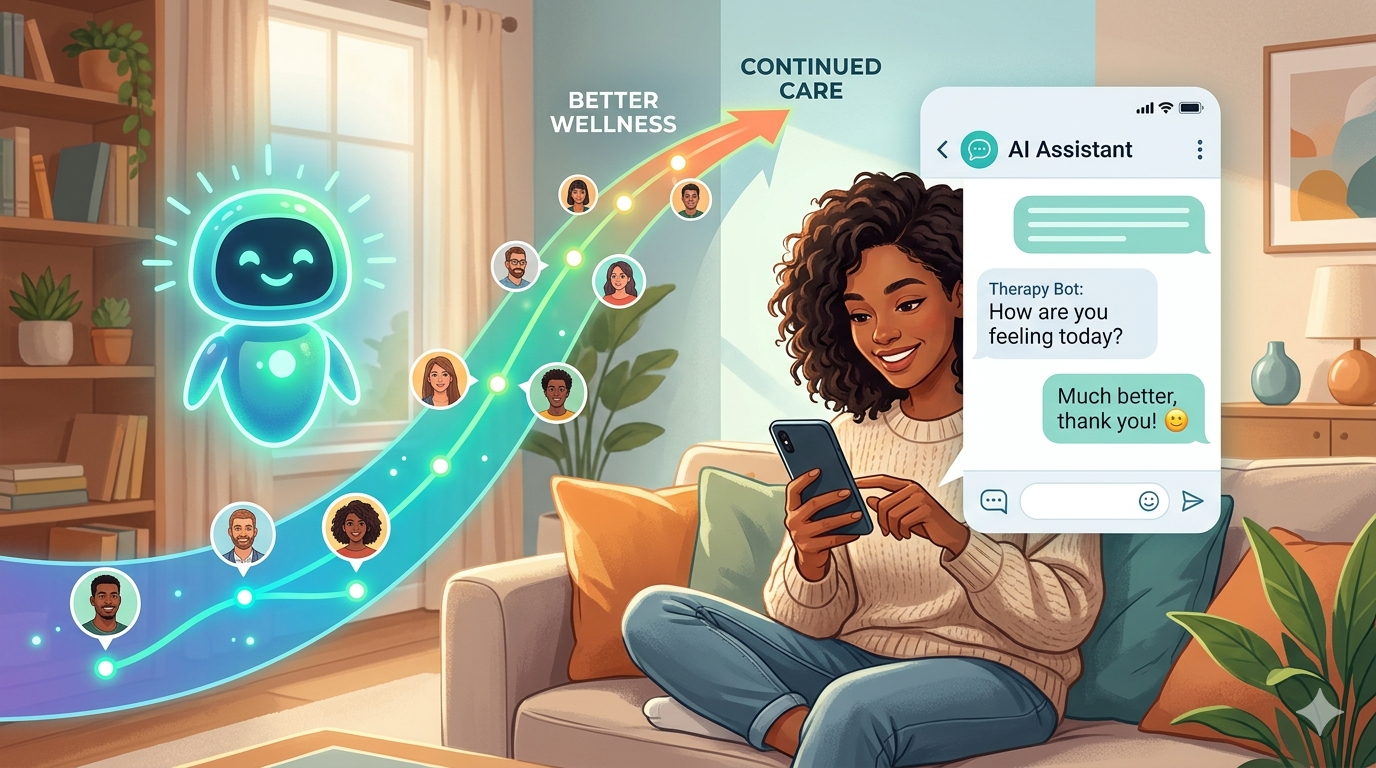
Patient engagement remains one of the biggest challenges in digital mental healthcare. While mental wellness applications and telehealth platforms continue to grow rapidly, many healthcare providers and healthtech startups struggle with high patient drop-off rates after initial onboarding.
Users often begin mental wellness journeys with strong intent but gradually disengage due to inconsistent follow-ups, lack of personalization, delayed therapist access, or limited emotional connection with digital platforms. For clinics, hospitals, rehab centers, and wellness startups, this disengagement directly affects treatment continuity, platform retention, operational efficiency, and long-term patient outcomes.
At Triple Minds, we are seeing a growing shift toward intelligent conversational systems designed specifically to address these engagement challenges. Organizations are increasingly investing in AI therapy chatbot development to create continuous, personalized, and scalable patient interaction experiences that help reduce abandonment rates across digital mental health platforms.
As digital healthcare evolves, AI-powered therapy systems are becoming a key retention layer within modern emotional wellness ecosystems.
Understanding the Patient Drop-Off Problem in Mental Healthcare
Patient disengagement is one of the most persistent operational issues within mental health services. Unlike many other healthcare categories, emotional wellness treatment often requires consistent engagement over extended periods of time.
However, several factors commonly contribute to user drop-off.
Long Gaps Between Therapy Sessions
Many users struggle to maintain emotional momentum between scheduled appointments.
Lack of Continuous Support
Patients may feel disconnected when platforms fail to provide ongoing interaction outside therapist sessions.
Generic Wellness Experiences
Non-personalized wellness systems often fail to create emotional relevance for users.
Emotional Fatigue and Motivation Loss
Mental health journeys are emotionally demanding, and users frequently disengage during difficult periods.
Delayed Responses in Telehealth Systems
Slow communication and limited therapist availability can reduce patient trust and engagement.
At Triple Minds, we believe the future of digital mental healthcare depends heavily on creating systems capable of maintaining meaningful emotional engagement between traditional care interactions.
This is one reason organizations are increasingly adopting scalable AI mental health platform technologies.
Why AI Therapy Chatbots Are Becoming a Retention Strategy
AI therapy chatbots are emerging as powerful tools for improving patient retention because they create continuous conversational engagement throughout the user wellness journey.
Unlike static wellness applications, conversational AI systems actively interact with users through personalized emotional wellness conversations, reminders, behavioral guidance, and mental health check-ins.
Modern therapy chatbots can help reduce patient drop-off by providing:
- Daily emotional wellness interactions
- Personalized therapy reminders
- Mood tracking conversations
- Guided mindfulness sessions
- Behavioral encouragement prompts
- Journaling and self-reflection exercises
- Cognitive behavioral therapy support activities
These continuous interactions help users remain emotionally connected to the platform even when they are not actively participating in live therapy sessions.
At Triple Minds, we are seeing healthcare providers increasingly position therapy chatbots as digital engagement companions rather than simple support automation tools.
How AI Therapy Chatbot Development Improves Patient Engagement
The rise of AI therapy chatbot development is directly linked to the growing need for scalable patient engagement infrastructure within digital healthcare ecosystems.
Several capabilities make AI-powered therapy systems especially valuable for retention-focused healthcare strategies.
Continuous Accessibility
AI-powered systems remain available 24/7, allowing users to access emotional wellness support whenever needed.
This accessibility helps reduce feelings of isolation between therapy appointments.
Personalized Conversations
AI systems analyze behavioral patterns and engagement history to personalize wellness interactions for individual users.
Personalized experiences often increase emotional connection and long-term platform usage.
Proactive Wellness Check-Ins
Therapy chatbots can initiate conversations proactively instead of waiting for users to engage manually.
This helps maintain engagement consistency during emotionally difficult periods.
Lower Psychological Barriers
Many users feel more comfortable interacting privately with conversational systems before discussing emotional concerns directly with healthcare professionals.
Real-Time Behavioral Monitoring
AI systems can detect reduced engagement patterns and trigger re-engagement workflows automatically.
This proactive approach helps reduce abandonment risks before users disengage entirely.
As healthcare organizations increasingly prioritize retention metrics, conversational AI is becoming a strategic component of digital mental healthcare infrastructure.
The Role of AI Mental Health Platforms in Retention Optimization
Modern emotional wellness ecosystems are increasingly being built around the concept of the AI mental health platform.
These platforms combine therapy chatbots with behavioral analytics, wellness tracking systems, and engagement management tools to create more comprehensive patient experiences.
Common platform features include:
- AI-powered therapy chatbots
- Emotional wellness dashboards
- Mood tracking systems
- Behavioral analytics engines
- Guided meditation modules
- Personalized therapy journeys
- Wellness engagement reporting
At Triple Minds, we are seeing healthtech startups and clinics increasingly integrate AI-powered engagement systems into broader telehealth and patient management ecosystems.
This integration allows organizations to improve retention while creating more scalable patient support operations.
Why AI Development Matters in Mental Health Retention Systems
Reducing patient drop-off requires more than simple chatbot deployment. Effective retention-focused systems require advanced AI development processes capable of understanding emotional behavior and engagement patterns.
Mental healthcare systems operate in highly sensitive environments where personalization, empathy, and contextual awareness are critically important.
Several technical priorities shape successful AI development for therapy engagement platforms.
Emotional Context Recognition
AI systems must understand emotional tone and conversational nuance rather than relying only on keyword detection.
Conversational Continuity
Therapy systems must maintain context across interactions to create meaningful long-term engagement.
Behavioral Personalization
AI platforms should adapt conversations and wellness recommendations based on user behavior and emotional trends.
Intelligent Re-Engagement Systems
AI models can identify early signs of disengagement and trigger personalized reactivation workflows.
Scalable Infrastructure
Healthcare platforms must support large user populations while maintaining responsiveness and security.
At Triple Minds, we approach emotional wellness AI systems with a strong focus on long-term engagement architecture and responsible AI behavior.
Why AI Model Training Is Essential for Patient Retention
One of the most important components of therapy chatbot performance is AI model training.
Generic conversational AI systems often fail to maintain emotional engagement because they lack behavioral understanding and emotional intelligence optimization.
Therapy systems must be trained to recognize:
- Emotional intent
- Motivation loss patterns
- Behavioral disengagement indicators
- Therapy-related conversational structures
- Emotional stress signals
At Triple Minds, we view AI model training as foundational to building emotionally intelligent patient engagement systems.
Training processes often include:
- Therapy-oriented conversational datasets
- Human feedback reinforcement learning
- Emotional classification systems
- Behavioral response optimization
- Retention-focused conversational modeling
- Safety and moderation frameworks
Properly trained systems significantly improve the chatbot’s ability to maintain meaningful emotional engagement over time.
Without specialized training, therapy chatbots may produce repetitive or emotionally disconnected interactions that contribute to user abandonment.
How Different Healthcare Organizations Benefit
Clinics
Clinics use therapy chatbots to maintain engagement between sessions and reduce missed appointments.
Hospitals
Hospitals leverage conversational AI to support mental wellness programs at scale while reducing operational strain on care teams.
Rehab Centers
Rehabilitation providers use therapy systems to maintain emotional accountability during recovery journeys.
Healthtech Startups
Digital wellness startups use AI chatbots to improve user retention, engagement metrics, and subscription longevity.
Corporate Wellness Platforms
Enterprises integrate therapy chatbots into employee wellness ecosystems to support mental health engagement continuously.
At Triple Minds, we are seeing retention optimization become one of the strongest business drivers behind therapy chatbot adoption across healthcare industries.
The Growing Demand for White Label AI Mental Health Apps
Many healthcare organizations are looking for faster deployment models that reduce infrastructure complexity while accelerating product launches.
This is one reason the white label AI mental health app model is gaining strong traction across digital healthcare ecosystems.
White label platforms allow organizations to launch branded emotional wellness systems using pre-built AI infrastructure and customizable therapy modules.
These platforms often include:
- AI therapy chatbots
- Mood tracking systems
- Emotional wellness dashboards
- Guided mindfulness programs
- Behavioral analytics tools
- Engagement monitoring systems
This approach allows businesses to focus more heavily on patient experience, healthcare delivery, and growth strategy while reducing development timelines.
Ethical Considerations in AI-Powered Patient Engagement
As AI systems become more integrated into mental healthcare ecosystems, ethical governance remains critically important.
Healthcare organizations must prioritize:
- Patient privacy protection
- Transparent AI interactions
- Human oversight frameworks
- Crisis escalation systems
- Bias mitigation practices
Responsible AI governance is essential for maintaining long-term trust within emotional wellness platforms.
At Triple Minds, ethical AI architecture remains central to how we design patient engagement systems for mental healthcare applications.
The Future of AI Therapy Chatbots in Mental Healthcare
The future of therapy chatbot technology is expected to become increasingly predictive, personalized, and emotionally intelligent.
Emerging innovations may include:
- Emotion-aware voice assistants
- Predictive disengagement analytics
- AI-powered behavioral coaching systems
- Wearable-integrated emotional monitoring
- Multimodal conversational experiences using voice and text
As these technologies evolve, AI systems may become proactive engagement companions capable of identifying patient disengagement risks before abandonment occurs.
This evolution could significantly improve long-term treatment continuity across digital mental healthcare ecosystems.
Conclusion
Patient retention remains one of the biggest operational challenges facing digital mental healthcare platforms today. As healthcare providers and wellness startups seek scalable solutions for improving engagement, AI-powered conversational systems are emerging as a critical component of modern mental wellness infrastructure.
Through personalized interactions, continuous support availability, behavioral analytics, and intelligent engagement workflows, AI therapy chatbot development is helping organizations reduce patient drop-off while improving long-term emotional wellness engagement.
At Triple Minds, we believe the future of digital mental healthcare will increasingly depend on emotionally intelligent systems capable of supporting users continuously and proactively.
With advancements in AI development, responsible AI model training, and scalable AI mental health platform technologies, AI-powered therapy chatbots are becoming foundational tools for improving patient retention and treatment continuity across the healthcare industry.

 English
 Arabic
 French
 Spanish
 Portuguese
 Turkish
 Dutch
Dutch
 Italiano
 Russian
 Romaian
 Portuguese (Brazil)
 Greek
Greek
