


How can pantry cabinet organization improve your kitchen
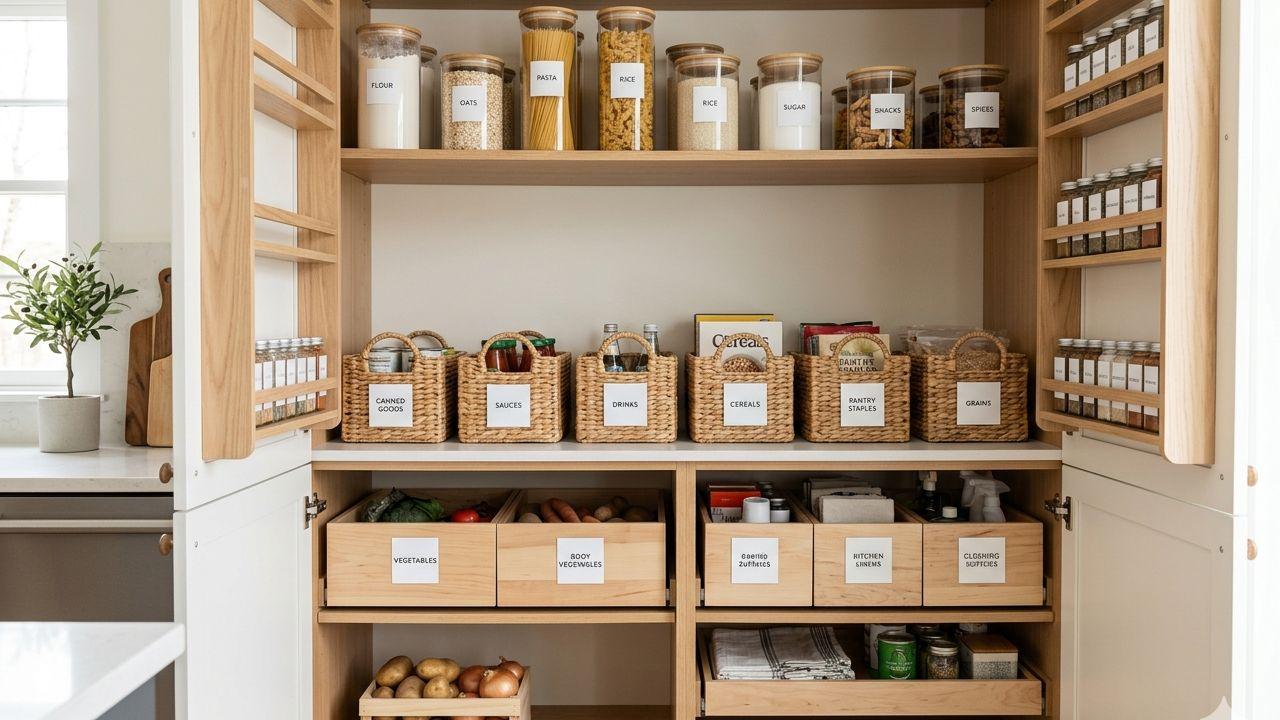
A well-organized pantry cabinet is one of the most effective ways to improve the functionality and appearance of your kitchen. When everything has a proper place, cooking becomes faster, grocery shopping becomes easier, and food waste is significantly reduced. However, many households struggle with messy shelves, expired products, and limited space. This is where effective pantry cabinet organization can completely transform your kitchen routine.
In this article, we will explore practical strategies, smart storage ideas, and expert-level tips to help you create a highly efficient pantry system that stays organized long-term.
Understanding the Importance of Pantry Cabinet Organization
Pantry cabinet organization is more than just arranging food items neatly. It is about creating a system that supports your daily cooking habits and household needs. A well-organized pantry helps in several ways:
First, it improves accessibility. When items are stored logically, you can quickly find what you need without wasting time searching through cluttered shelves. Second, it reduces food waste by ensuring that older items are used before they expire. Third, it helps control grocery spending because you always know what you already have in stock.
A poorly organized pantry often leads to duplicate purchases and forgotten ingredients hiding at the back of shelves. With proper organization, your kitchen becomes more efficient, cleaner, and stress-free.
Step 1: Start with a Complete Pantry Clean-Out
Before implementing any organization system, it is essential to begin with a full clean-out of your pantry cabinet. Remove every item and place them on a clear surface. This step allows you to assess what you actually have.
While emptying your pantry, check expiration dates carefully. Discard expired, stale, or unused items. Be honest during this process; if something has not been used in months and is unlikely to be used, it is better to remove it.
Once everything is cleared, wipe down shelves thoroughly. Cleaning the space gives you a fresh start and ensures that your new organization system remains hygienic and long-lasting.
Step 2: Categorize All Pantry Items
After decluttering, the next step is to sort your items into categories. Grouping similar products together is the foundation of effective pantry cabinet organization.
Common categories include:
- Grains and pasta
- Canned goods
- Baking supplies
- Snacks
- Breakfast items
- Spices and condiments
- Beverages
This method allows you to see exactly what you have in each category. It also makes meal preparation easier because ingredients are stored in predictable locations.
For example, all baking essentials like flour, sugar, and baking powder should be stored together. Similarly, snacks like chips, cookies, and crackers should have their own designated section.
Step 3: Choose the Right Storage Containers
Using proper storage containers is a game-changer in pantry cabinet organization. Instead of keeping items in original packaging, transfer them into clear, airtight containers. This helps in several ways:
- Keeps food fresh for longer
- Prevents pest infestations
- Saves space by creating uniform shapes
- Improves visibility of contents
Clear containers are especially useful because you can easily see what is inside without opening them. Label each container clearly with the item name and expiration date for better tracking.
Stackable containers are ideal for maximizing vertical space, especially in smaller pantry cabinets.
Step 4: Maximize Shelf Space Efficiently
Most pantry cabinets have limited space, so it is important to use every inch wisely. Adjustable shelves, shelf risers, and stackable bins can help increase storage capacity significantly.
Place frequently used items at eye level for easy access. Less frequently used items can be stored on higher or lower shelves. Heavy items such as large bottles or bulk packs should always be placed on lower shelves for safety and stability.
Using tiered shelf organizers for canned goods can also improve visibility, preventing items from being forgotten at the back.
Step 5: Implement a Logical Arrangement System
A successful pantry cabinet organization system depends on how logically items are arranged. There are several approaches you can use:
Zone-Based Organization
Divide your pantry into zones based on usage. For example:
- Cooking zone (pasta, sauces, oils)
- Breakfast zone (cereals, oats, spreads)
- Snack zone (chips, nuts, bars)
This method is highly efficient for families because everyone knows where each type of food belongs.
Frequency-Based Organization
Another approach is to organize items based on how often they are used. Daily-use items should be placed at the front, while occasional-use items can be stored further back.
Step 6: Label Everything Clearly
Labeling plays a crucial role in maintaining pantry organization. Even if your containers are clear, labels help prevent confusion and keep everyone in the household on the same system.
You can use printed labels, handwritten tags, or even chalkboard stickers. Include the item name and, if possible, the purchase or expiration date.
Proper labeling also helps children and other family members return items to the correct place, reducing clutter over time.
Step 7: Maintain a First-In, First-Out System
The first-in, first-out (FIFO) method is essential for keeping food fresh and reducing waste. This means older products should always be placed in front, while newer ones go behind them.
For example, when you buy a new pack of rice or canned goods, place it behind the older stock. This ensures that nothing expires unnoticed at the back of your pantry.
This simple habit can save money and keep your pantry consistently organized.
Step 8: Make Use of Door and Vertical Space
Many people overlook the inside of pantry doors and vertical walls. These areas can provide valuable extra storage.
Door racks can be used for storing spices, small jars, or packets. Hanging organizers are perfect for lightweight items such as seasoning packets or snack bars.
Vertical dividers can also be used to store baking trays, cutting boards, or foil rolls. Utilizing these spaces helps reduce clutter on main shelves.
Step 9: Regular Maintenance is Key
Even the best pantry cabinet organization system will not last without maintenance. Set a routine to review your pantry every few weeks.
During maintenance, check for expired items, reorganize misplaced products, and clean shelves if needed. This prevents clutter from building up again and keeps your system working efficiently.
A quick 10–15 minute check every two weeks is usually enough to maintain order.
Step 10: Customize Based on Your Lifestyle
Every household has different needs, so your pantry organization should reflect your lifestyle. A large family may require bulk storage solutions, while a single person may prioritize compact and minimal organization.
If you cook frequently, prioritize easy access to ingredients. If you prefer meal prepping, dedicate sections for pre-planned meals and ingredients.
The key is flexibility. A pantry system should support your daily habits, not restrict them.
Conclusion
Effective pantry cabinet organization is not just about aesthetics; it is about improving efficiency, reducing waste, and simplifying daily life. By decluttering, categorizing items, using proper storage containers, and maintaining a logical system, you can transform even the most chaotic pantry into a highly functional space.
The most important factor is consistency. Once you establish an organization system, regular maintenance ensures it continues to work smoothly over time. With the right approach, your pantry cabinet can become one of the most efficient and well-ordered areas in your entire home.

 Arabic
 French
 Spanish
 Portuguese
 Deutsch
 Turkish
 Dutch
Dutch
 Italiano
 Russian
 Romaian
 Portuguese (Brazil)
 Greek
Greek
