


FPS Estimator Predict Your Gaming FPS Before You Upgrade
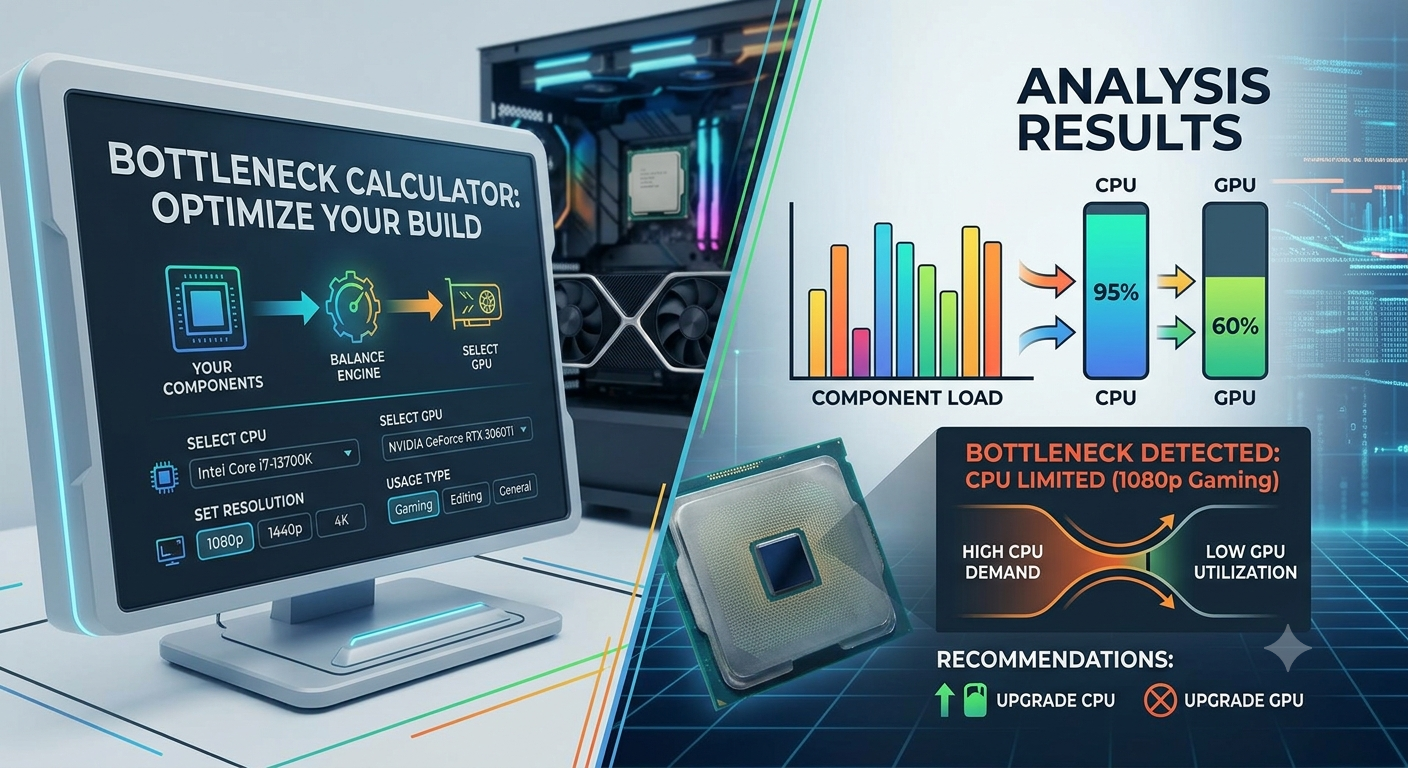
FPS Estimator: The Smartest Way to Predict Your Gaming Performance
Every gamer eventually asks the same question. Will my PC run this game smoothly or will I be stuck watching a slideshow instead of a battlefield. An FPS estimator answers that question before you spend a single dollar on new hardware. It takes your existing or planned components and gives you a realistic prediction of the frame rate you can expect in a chosen game and resolution. This removes guesswork and replaces it with data driven confidence for every build decision you make.
Frame rate is more than a number sitting quietly in the corner of your screen overlay. It represents how smooth your gameplay feels how responsive your aim is and how competitive you can be in fast paced titles. A low frame rate causes stutter and delayed reactions while a high and stable frame rate creates a fluid experience that feels natural under pressure. An FPS estimator helps you understand exactly where your current setup stands and what changes would push that number higher without wasting money on the wrong component.
Using a dedicated tool like the FPS Calculator makes this entire process fast and accurate. Instead of scrolling through dozens of forum threads and outdated benchmark videos you simply select your CPU your GPU your target resolution and your preferred game settings. Within seconds you receive an estimated frame rate range for that exact combination. Pair this with the broader toolkit on the Bottleneck Calculator and you get a complete picture of your system performance including bottleneck analysis and power supply planning in one place.
Several factors influence the number an FPS estimator produces. Resolution plays a major role since jumping from 1080p to 1440p or 4K shifts more of the workload onto the graphics card. Graphics settings such as shadow quality texture resolution and ray tracing also change the load dramatically. Even background applications driver versions and storage speed can nudge your real world frame rate slightly away from the predicted range. A good estimator accounts for the most common variables so the prediction stays close to what you will actually experience in game.
The relationship between your CPU and GPU determines a large part of your final frame rate. In CPU heavy titles such as open world games with dense simulation or strategy games with hundreds of units on screen the processor often becomes the limiting factor. In visually demanding titles at high resolution the graphics card usually carries most of the workload instead. An FPS estimator factors in this balance so you are not left guessing which component actually needs an upgrade to hit your target frame rate.
Checking your expected performance before you buy saves both money and disappointment. Many gamers purchase a flashy new graphics card only to discover their older processor cannot keep up leaving performance well below expectations. Running the numbers through an estimator first tells you whether your current platform can support the upgrade or whether a processor change should come first. This kind of planning turns a hardware purchase into a calculated investment rather than an expensive guess.
There are a few common misconceptions worth clearing up. Some players assume an estimator will give a single exact number that matches their screen perfectly every time. In reality these tools provide a realistic range based on benchmark averages since real world results shift slightly with drivers thermals and background tasks. Others believe a lower predicted frame rate always means broken hardware when it may simply mean the settings chosen are demanding for the selected resolution. Understanding the estimate as a strong directional guide rather than an absolute promise leads to better decisions.
If your predicted frame rate falls short of your target there are practical steps you can take before spending on new parts. Lowering a few demanding settings such as shadows and reflections often recovers a meaningful amount of performance. Updating graphics drivers and enabling performance modes built into modern games can also help close the gap. Closing background applications and ensuring your storage drive is not overloaded further supports stable frame delivery. Only after these adjustments should a hardware upgrade be considered the next logical step.
Planning ahead matters just as much as checking your current setup. If you are considering a new monitor with a higher refresh rate an FPS estimator lets you check whether your hardware can actually push enough frames to take advantage of it. There is little benefit in owning a two hundred and forty hertz monitor if your system tops out at eighty frames per second in your favorite titles. Testing hypothetical upgrades through the estimator before purchasing anything keeps your budget focused on components that will deliver a real and noticeable difference.
An FPS estimator turns an uncertain guessing game into a clear and informed decision. Whether you are building a first gaming rig upgrading an aging system or simply curious about how a new title will run on your hardware this tool gives you the numbers you need before you commit any money. Smooth gameplay starts with knowing what your system can realistically deliver and an FPS estimator is the fastest way to find that answer.
Frequently Asked Questions
What is an FPS estimator?
An FPS estimator is a tool that predicts the frame rate your PC will achieve in a specific game based on your CPU GPU resolution and graphics settings.
How accurate is an FPS estimator?
It provides a realistic range based on benchmark data rather than a single guaranteed number since real world results can vary with drivers thermals and background load.
Does resolution affect the estimated FPS?
Yes higher resolutions shift more workload onto the GPU while lower resolutions rely more heavily on the CPU which changes the predicted frame rate significantly.
Can an FPS estimator help me decide what to upgrade?
Absolutely it shows whether your CPU or GPU is more likely to limit performance so you can prioritize the upgrade that delivers the biggest improvement.
Should I check FPS before buying a new monitor?
Yes checking your expected frame rate first ensures your hardware can actually take advantage of a higher refresh rate monitor before you spend money on one.
Is a lower predicted FPS a sign of broken hardware?
Not usually a lower number often just reflects demanding settings or resolution rather than a fault and adjusting settings can frequently close the gap.
 Russian
 English
 Arabic
 French
 Spanish
 Portuguese
 Deutsch
 Turkish
 Dutch
Dutch
 Italiano
 Romaian
 Portuguese (Brazil)
 Greek
Greek
