


How to Set Up Utilities on a Construction Site?
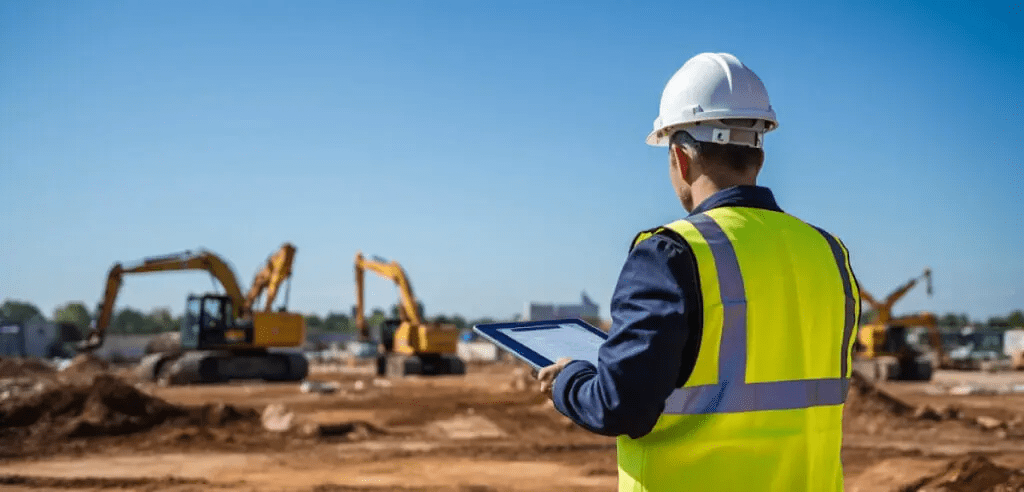
Setting up utilities on a construction site in the United States requires careful planning, permits, and coordination with local providers to install temporary services like power and water before transitioning to permanent systems that meet building codes and safety standards. For example, utilities like electricity, water, gas, sewer, and telecommunications must be available right from the start at construction sites, whether it is a house in Texas or a store in California, as these utilities support work running smoothly and also avoid very expensive delays.
In fact, a lot of contractors lately have been partnering with reliable construction estimating consultants to confidently predict utility expenses and schedules. Working together, they prevent going over budget and at the same time make sure that each stage from temporary connections to permanent installations is planned both financially and logistically before the actual work starts.
Pre-Planning and Site Assessment
It is proper planning that first of all decides how well the whole project will go, even before starting the work of digging trenches or installing lines. In America, looking at the site in advance is not just something nice to do; it is closely linked with compliance and risk management, and hence is unavoidable.
You start by figuring out the project scope. One house will require very different utility facilities from a block of flats, for example. The team will go over the electrification needs, amount of water supply, drainage capability, and expansion opportunities in the future.
Thoroughly mapping the land will then come next. This will figure out the type of soil, height, and what the challenges could be. For example, the kind of soil will decide the appropriate trenching technique and the kind of pipe that will last. Here is also the stage where contractors have to call the nationwide 811 service to get existing underground utilities located. Not doing so may lead to serious safety and legal problems.
Along with that, local zoning laws and municipal codes are the other big influencers. Every city or county operates according to its own set of requirements, which, to a great extent, determine where and in what way the utilities can be put in. Throwing these rules out the window is mostly a sure ticket to failing inspections and incurring major expenses to make changes.
Permits and Legal Requirements
In fact, in America, obtaining permission forms a core part of the utility installation process. Each major utility, electrical, plumbing, and gas, requires a go-ahead before they are installed.
Oftentimes, contractors will hand in plans to the local building authorities, highlighting arrangements and compliance with code requirements such as the National Electrical Code (NEC) or local plumbing standards.
Depending on a particular jurisdiction, the time for approval of plans may differ; however, the permit delay can lead to a halt in the project.
Working with utility companies is just as important. Electricity, water, and gas service providers need to approve the hookup and might even perform an inspection on their own.
These organizations usually have very strict scheduling windows, which means communication from you has to be timely.
Also, OSHA safety rules still come into play, especially for temporary utilities. For instance, correct grounding of the electrical system, safety in the positioning of water lines, etc., will be in line with regulations.
Temporary Utilities Setup
Temporary utilities keep a construction site operational. Even when the permanent utilities aren't installed yet, work can start with their provisions.
Temporary electricity is mostly generated by mobile generator units or power poles, which the local power company sets up temporarily. This installation is used for making power supply available to tools, lights, and machinery.
Water could be supplied through the use of hydrants, water tanks, or temporary connections, all depending on the situation on-site.
Facilitating sanitation is equally a vital consideration. OSHA requires proper restroom facilities for workers, which generally translates to the placement of portable toilets at strategic points throughout the site.
During this stage, lighting and security are the things that have to be dealt with as well.
Sufficient lighting is not only about ensuring the workers are working safely even during nighttime, but also security efforts lead to the protection of materials and equipment from theft or vandalism.
Permanent Utility Planning & Design
When a project is progressing, the main focus turns to the creation of permanent utility installations. At this period, engineers, architects, and builders collaborate to produce comprehensive plans.
The locations of utilities should be compatible with the overall architectural concept of the building. A precise arrangement of water supply lines, sewer networks, and electrical wiring must be drawn in a way that is free from clashes with the building elements. For the electrical systems, the load computations are the most critical to confirm that the building will be able to support both the current and the future power requirements.
Often, project managers decide to use software such as primavera construction scheduling to coordinate utility installations with other construction phases. Good scheduling is the key to assuring that the utility tasks will not cause delays to the activities related to foundation, frame, or other finishing operations.
The primary objective is to develop a system that is not only efficient and long-lasting but also adheres to all the local and national codes and standards.
Utility Installation Process
This phase is the actualization of the planning stage. The kickoff is done by trenching and excavation, which have to be in line with the latest safety and engineering regulations.
Water and sewer pipes are the first to be installed, and then the stormwater drainage system is installed. The electrical conduits and cables are the last to be done before the panels and meter installations.
The gas line installations need another level of care and should only be done by highly qualified and licensed personnel. The smallest mistake when dealing with gas can cause severe dangers, which is why inspections and tests after the installation of gas lines are mandatory.
The table below provides a very general overview of some major utility elements as well as some of their installation issues:
|
Utility Type |
Key Components |
Installation Considerations |
|
Electricity |
Panels, wiring, meters |
Load capacity, grounding, code compliance |
|
Water |
Pipes, valves, meters |
Pressure levels, leak prevention |
|
Sewer |
Drain pipes, vents |
Proper slope, waste flow efficiency |
|
Gas |
Gas lines, regulators |
Safety checks, licensed installation |
|
Telecom |
Fiber, cables |
Future scalability and connectivity needs |
Inspection and Testing
Comprehensive inspection and testing are indispensable parts of every utility system in the U.S. At the very least, local authorities and utilities must make sure that the installations comply with all the codes and safety standards.
Before bringing electrical systems online, they are subjected to load testing to verify their capacity to cope with the anticipated loads. Plumbing systems are checked for leaks, pressure, and stability. The gas lines are thoroughly examined to detect any leakage.
In most cases, the inspection process is phased. For instance, the inspectors may examine the underground utilities before the trenches are filled, whereas the final inspections are conducted after the entire installation has been completed. One cannot proceed with the construction without these inspections result being favorable.
Final Connections and Activation
The last step is to connect the systems that have been installed to the main utility lines and activate the services. Usually, this work has to be done by utility companies, who may have to physically come out to cut the connections and ensure that the system is ready to be used.
Once the systems are switched on, they will need continuous monitoring to make sure that they are working properly in a live environment. Any problems found during this phase should be fixed right away so as not to create bigger issues later on.
So now the construction site is moving away from having just temporary arrangements towards becoming a place with fully functioning systems that will help in completing the building.
Conclusion
Installation of utilities on a construction site in the United States is a carefully planned operation that involves coordination, compliance with laws, and several steps, starting from the first evaluation to the final switching on. A failure at one step could jeopardize the whole development.
Builders who dedicate their efforts to properly setting up utilities are not only saving themselves from delays but also laying a solid basis for the future success of the project. In the building industry, where competition is high, being meticulous in these areas is often what sets apart those who manage to complete their buildings without incurring huge losses from those who do not.
FAQs
How long does it take to set up utilities on a construction site in the U.S.?
Usually, setting up the utilities on a construction site in the U.S. takes 2-8 weeks, depending on permits, the size of the project, and coordination with utility companies.
Are permits necessary for temporary utilities?
Yes, in most U.S. areas, permits are required even for setting up temporary power, water, and sanitation facilities.
What is the 811 service?
This service is your nationwide system to locate underground utilities before any digging is done, thus avoiding accidents and damage.
Who sets up construction site utilities?
These are installed by licensed professionals such as electricians, plumbers, and gas technicians, who also make sure that the work is up to code.
What are the usual errors during utility installation?
The main problems are usually poor planning, working without permits, no inspections, and insufficient coordination with utility providers.

 English
 Arabic
 French
 Spanish
 Portuguese
 Deutsch
 Turkish
 Dutch
Dutch
 Italiano
 Russian
 Romaian
 Portuguese (Brazil)
