


What Is Einstein’s IQ? Understanding the Mystery Behind His Genius Mind
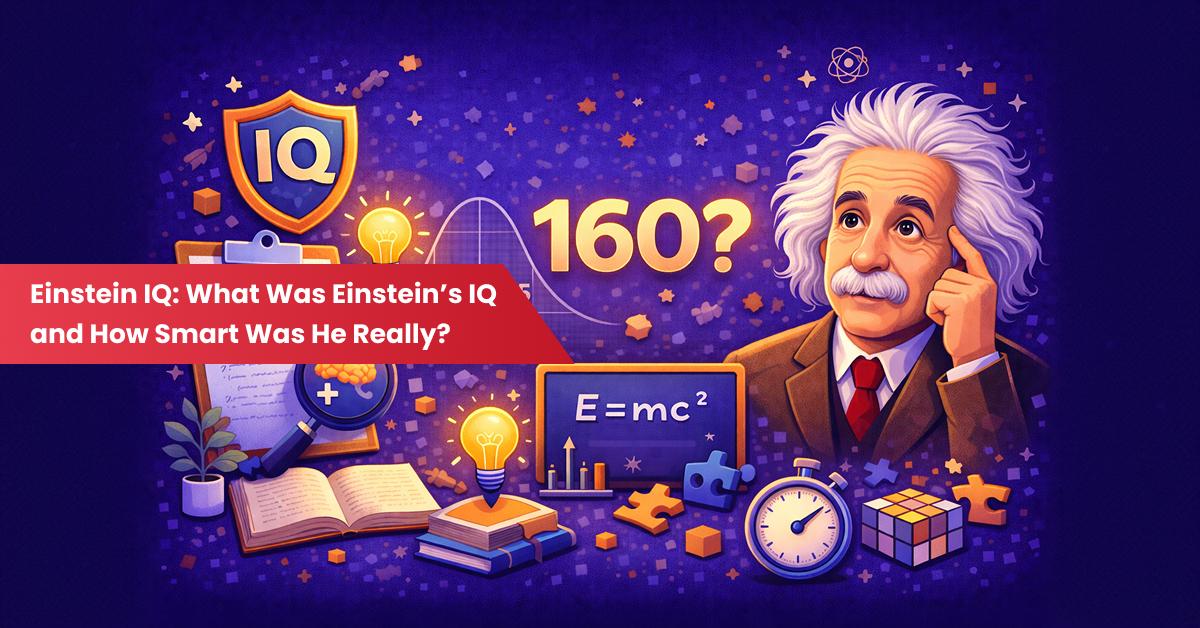
When people talk about the greatest minds in history, one name almost always comes up: Albert Einstein. His theories reshaped modern physics, his ideas changed how we understand time and space, and his legacy continues to influence science today. Because of his extraordinary reputation, many people ask a simple question: what is Einstein’s IQ? The answer, however, is not as straightforward as it may seem.
IQ, or Intelligence Quotient, is a standardized measure designed to evaluate human cognitive ability. But when it comes to historical figures like Einstein, there is no verified IQ test score. Instead, experts estimate his intelligence based on his achievements, thinking style, and contributions to science.
To understand why there is so much mystery around Einstein’s IQ, it is important to explore what IQ actually measures, why Einstein was so exceptional, and why assigning him a number is more complicated than most people think.
Who Was Albert Einstein?
Albert Einstein was a German born theoretical physicist who developed some of the most important scientific theories in human history. He is best known for the theory of relativity, especially the equation E = mc², which describes the relationship between energy and mass.
Einstein was not just a scientist. He was also a thinker who challenged traditional ideas about space, time, and reality itself. His work laid the foundation for modern physics and influenced fields ranging from cosmology to quantum mechanics.
Because of his groundbreaking contributions, people often assume he must have had an extremely high IQ score. This is where the question what is einstein's iq becomes so popular, especially among students, educators, and enthusiasts of science history.
Did Einstein Ever Take an IQ Test?
The short answer is no. Einstein never took a modern standardized IQ test. During his lifetime, IQ testing was still in its early stages and not widely used in the way it is today. The tests that exist now, such as the Stanford Binet or Wechsler scales, were either not fully developed or not commonly administered during his early academic years.
This means there is no official record of Einstein’s IQ score. Any number you see online is an estimate rather than a confirmed measurement.
Despite this, many websites claim that Einstein’s IQ was around 160 or even higher. However, these figures are speculative and not based on actual test results.
So What Is Einstein’s IQ According to Estimates?
Since no official data exists, psychologists and historians have attempted to estimate Einstein’s IQ based on his intellectual output and problem solving abilities. Most estimates place his IQ somewhere between 160 and 190.
To put that in perspective, an IQ of 100 is considered average, while anything above 130 is often classified as highly gifted. A score above 160 is considered exceptionally rare.
However, these estimates should not be treated as factual. They are more symbolic than scientific. The real answer to what is einstein's iq is that it cannot be measured accurately using modern IQ testing systems.
Why IQ Cannot Fully Measure Genius
IQ tests are designed to measure specific cognitive abilities such as logic, pattern recognition, mathematical reasoning, and verbal comprehension. While these are important skills, they do not capture the full range of human intelligence.
Intelligence Quotient testing is useful for identifying certain types of cognitive strengths, but it does not measure creativity, curiosity, imagination, or deep conceptual thinking. These are qualities that played a major role in Einstein’s genius.
Einstein’s brilliance was not just about solving equations. It was about imagining concepts that had never been considered before. For example, he famously used thought experiments, such as imagining riding alongside a beam of light, to develop his theories.
Such creative thinking is not something traditional IQ tests can fully capture.
What Made Einstein a Genius?
Einstein’s intelligence was not just about raw mental power. It was also about how he approached problems. Several traits contributed to his success.
First, he had extraordinary imagination. He could visualize complex physical concepts in his mind long before they were proven mathematically.
Second, he had strong persistence. Many of his ideas were developed over years of deep thinking and refinement.
Third, he questioned assumptions. Instead of accepting established scientific beliefs, he challenged them and looked for deeper explanations.
These qualities show that genius is not just about scoring high on a test. It is about thinking differently and pushing boundaries of knowledge.
The Myth of a Perfect IQ Score
The fascination with what is einstein's iq comes from a broader cultural belief that intelligence can be reduced to a single number. While IQ scores can provide useful information, they are not definitive measures of human potential.
In reality, intelligence is multi dimensional. A person may excel in mathematics but struggle in social communication. Another person may have average test scores but exceptional creativity or leadership skills.
Einstein himself reportedly believed that imagination was more important than knowledge. This idea highlights the limitations of trying to define genius with a number.
Einstein’s Early Academic Life
Interestingly, Einstein was not always seen as a genius in his early years. As a student, he did not always perform exceptionally in traditional classroom settings. Some accounts suggest he struggled with rigid teaching methods that did not match his independent thinking style.
However, this does not mean he lacked intelligence. Instead, it shows that intelligence can express itself in different ways. Standardized education systems often fail to recognize unconventional thinkers, especially those who question established methods.
This further complicates the idea of assigning a fixed IQ score to someone like Einstein.
Why People Still Ask About Einstein’s IQ
The question what is einstein's iq remains popular because people want a simple explanation for extraordinary ability. A single number feels easier to understand than complex scientific achievements.
It also reflects a desire to compare intelligence across individuals. If Einstein had a measurable IQ, people could place him on a scale and relate his abilities to their own.
However, this comparison is misleading. Genius is not a competition of numbers. It is the result of curiosity, effort, environment, and creative thinking working together.
Modern Perspective on Intelligence
Today, psychologists understand that intelligence is far more complex than early IQ theories suggested. Modern research includes concepts such as emotional intelligence, creative intelligence, and practical intelligence.
Einstein’s success aligns more closely with this broader understanding. His ability to think abstractly, question assumptions, and develop revolutionary theories reflects a combination of different cognitive strengths rather than a single measurable score.
This modern perspective helps explain why trying to define Einstein’s IQ precisely is not scientifically meaningful.
Conclusion
The question what is einstein's iq does not have a definitive answer because Albert Einstein never took an official IQ test. Most estimates suggesting a score between 160 and 190 are speculative and not verified.
More importantly, reducing Einstein’s genius to a number overlooks the true nature of his intelligence. His creativity, imagination, persistence, and ability to challenge established scientific ideas were far more important than any test score.
Einstein remains one of the most influential thinkers in human history not because of a high IQ number, but because of how he transformed our understanding of the universe. His legacy reminds us that intelligence cannot be fully captured by a single measurement and that true genius often goes beyond what any test can define.
 Greek
Greek
 English
 Arabic
 French
 Spanish
 Portuguese
 Deutsch
 Turkish
 Dutch
Dutch
 Italiano
 Russian
 Romaian
 Portuguese (Brazil)
