


How Safety Consulting in Malaysia Fixes Near Miss Reporting
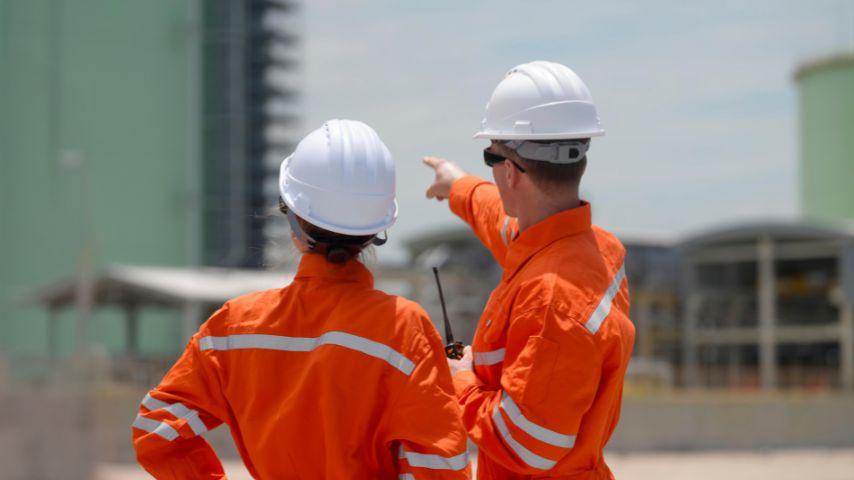
The Occupational Safety and Health (Amendment) Act 2022 fundamentally changed how businesses across Malaysia must handle workplace hazards, making proactive risk management a strict legal requirement. This comprehensive guide explains how safety consulting firms help Malaysian companies capture and analyze near miss data to prevent severe accidents. Readers will learn exactly how to build a no-blame reporting culture, navigate the latest Department of Occupational Safety and Health (DOSH) regulations, and implement sustainable safety frameworks that protect both employees and corporate bottom lines.
Key Takeaways
· The Occupational Safety and Health (Amendment) Act 2022, effective June 1, 2024, extends safety compliance to all workplaces and increases maximum employer penalties to RM500,000.
· A near miss is an unplanned workplace event that did not result in injury or damage but had the clear potential to do so, acting as a crucial early warning system.
· Safety consulting in Malaysia helps businesses overcome the "fear of blame" by establishing anonymous, accessible reporting systems that encourage employee participation.
· Companies with five or more employees must now legally appoint a trained Occupational Safety and Health (OSH) Coordinator to manage hazard identification and near miss documentation.
· Addressing near misses proactively aligns with Heinrich's Triangle theory, which demonstrates that eliminating minor hazards directly prevents major workplace fatalities.
What constitutes a near miss under Malaysian workplace safety guidelines?
A near miss is an unplanned incident that does not cause injury, health issues, or property damage, but easily could have under slightly different circumstances. According to the Department of Occupational Safety and Health (DOSH) [Guidelines on Occupational Safety and Health Management Systems, 2024], safety professionals also refer to a near miss as a "close call," "near hit," or "dangerous occurrence."
Understanding the definition of a near miss is the first step toward building a safer work environment. For example, if a heavy box falls from a warehouse shelf and lands empty space right next to a worker, that specific event is a near miss. No one suffered physical harm, and no equipment sustained damage. However, the root cause of the falling box—perhaps improper stacking or a faulty shelf—remains a severe threat.
Malaysian businesses historically focused only on documenting actual injuries. This reactive approach leaves underlying hazards completely unaddressed. By tracking near misses, an organization gains actionable data about systemic failures. Safety consulting firms train employees to recognize these close calls. Consultants help staff understand that a near miss is not an indicator of personal failure, but rather a valuable opportunity to improve the overall Occupational Safety and Health Management System (OSHMS).
Why is near miss reporting critical for accident prevention in Malaysia?
Near miss reporting is critical because identifying and resolving minor hazards acts as a preventative barrier against severe, life-threatening accidents. According to Heinrich's Triangle [Industrial Accident Prevention, 1931], a direct statistical relationship exists between minor incidents and major disasters.
Heinrich's Triangle demonstrates that for every one major injury or fatality in a workplace, there are 29 minor injuries and 300 near misses. The foundational premise of this safety theory is simple: major accidents do not happen out of nowhere. Major accidents occur because organizations ignore the hundreds of warning signs that precede them.
When Malaysian businesses actively document the 300 near misses at the bottom of the triangle, safety managers can implement corrective measures before the hazards progress upward. Safety consulting professionals use near miss data to identify operational trends. If a manufacturing plant logs twenty near misses involving slippery floors in a single month, the safety consultant knows exactly where to direct maintenance resources. Eliminating the hazards at the near-miss level effectively eliminates the possibility of the major injury at the top of the pyramid.
How does the OSHA Amendment Act 2022 impact near miss reporting?
The Occupational Safety and Health (Amendment) Act 2022 legally mandates proactive hazard management, heavily increasing the financial risks for companies that fail to address near misses and systemic safety issues. According to the Malaysian government [Federal Gazette, April 2024], the Amendment Act officially came into operation on June 1, 2024.
The new legal framework fundamentally alters the compliance landscape for Malaysian employers. Previously, the Occupational Safety and Health Act 1994 only applied to specific industries like manufacturing, construction, and mining. The Amendment Act 2022 extends safety obligations to all workplaces across Malaysia, including public services and statutory authorities.
Failing to address the hazards revealed by near misses now carries severe financial consequences. Under the revised Sections 15, 16, 17, and 18A, the maximum fine for employers, self-employed persons, and principals who contravene safety provisions increased from RM50,000 to RM500,000. Additionally, Section 26A grants employees the legal right to remove themselves from imminent danger. If an employer ignores repeated near miss reports regarding a faulty machine, an employee can legally refuse to operate that machine without facing disciplinary action.
Furthermore, Section 29A introduces a strict personnel requirement. Employers with five or more employees must appoint a trained Occupational Safety and Health (OSH) Coordinator. This OSH Coordinator holds the responsibility of managing safety protocols, making the documentation and resolution of near misses an unavoidable daily duty for small and medium enterprises.
What are the common barriers to reporting near misses in Malaysian workplaces?
The primary barrier to reporting near misses in Malaysia is the fear of blame, followed closely by complex reporting procedures and a lack of hazard awareness. Employees generally avoid reporting near misses because they worry management will punish them for making a mistake.
If an employee almost causes a forklift collision, their first instinct is often to hide the incident. A punitive corporate culture equates near misses with incompetence. When workers hide close calls, safety managers lose visibility over dangerous operational flaws.
Additionally, convoluted reporting systems discourage participation. If an employee must fill out a five-page physical document to report a simple hazard, they will likely abandon the process entirely. Time constraints on the factory floor or construction site make lengthy administrative tasks impossible. Finally, a general lack of safety education means many workers simply do not recognize a near miss when they see one. They view falling debris or electrical sparks as normal operational hazards rather than critical safety deviations.
How do safety consulting firms in Malaysia improve the near miss reporting process?
Safety consulting firms improve the reporting process by implementing a "no-blame" safety culture, establishing digital reporting tools, and conducting mandatory Hazard Identification, Risk Assessment, and Risk Control (HIRARC) training. Safety consultants provide external, objective expertise that bridges the gap between floor workers and upper management.
First, a safety consultant systematically dismantles punitive management habits. Consultants train leadership teams to reward employees who report near misses. By shifting the focus from finding a guilty party to finding the root cause of the hazard, safety consultants foster a transparent environment where workers feel safe speaking up.
Second, safety consultants streamline the actual documentation process. Consultants frequently introduce mobile-friendly, digital reporting applications. These systems allow workers to log a near miss in seconds using a smartphone, removing the friction of outdated paperwork.
Finally, safety consultants train the mandatory OSH Coordinators in the HIRARC methodology. The HIRARC process requires organizations to actively seek out hazards before work begins. Consultants teach OSH Coordinators how to use near miss data as the primary input for risk assessments, ensuring that every reported close call translates directly into improved safety controls.
In-house safety management vs. outsourced safety consulting: Which is better?
Outsourcing safety management to a specialized consulting firm provides faster compliance and objective hazard analysis, whereas in-house safety management offers deeper, long-term integration with company culture. Choose specialist safety consulting if rapid compliance with the OSHA Amendment Act 2022 matters more than maintaining a full-time, internal safety department.
Organizations must weigh the financial and operational realities of both approaches. The table below outlines the distinct differences between building an internal safety team and hiring an external safety consultancy in Malaysia.
|
Decision Factor |
In-House Safety Management |
Outsourced Safety Consulting |
|
Initial Cost |
High (Requires full-time salaries, benefits, and ongoing training for staff). |
Moderate (Project-based or retainer fees; no full-time employee overhead). |
|
Compliance Speed |
Slow (Internal staff must research and adapt to the OSHA Amendment Act 2022). |
Fast (Consultants possess immediate, up-to-date expertise on DOSH regulations). |
|
Objectivity |
Low (Internal politics and fear of executive blame can suppress accurate reporting). |
High (Consultants provide unbiased audits and prioritize legal compliance over politics). |
|
Cultural Integration |
High (Internal managers understand the unique social dynamics of the specific workplace). |
Moderate (Consultants require time to build trust and rapport with the existing workforce). |
|
Resource Allocation |
Dedicated (Safety personnel focus 100% on the single company). |
Shared (Consultants split their time across multiple industry clients). |
Choose outsourced safety consulting if your business needs immediate risk assessments, OSH Coordinator training, and guaranteed compliance with the newly increased RM500,000 penalty thresholds. Choose in-house safety management if your enterprise has thousands of employees and requires a massive, dedicated department working on safety culture daily.
Conclusion
Transitioning from reactive accident management to proactive near miss reporting saves lives and shields businesses from crippling legal penalties. The OSHA Amendment Act 2022 proves that the Malaysian government expects total compliance and rigorous hazard identification from all employers, regardless of industry size.
Safety consulting firms such as Wellkinetics offer the exact tools, training, and objective insights required to transform a hazardous workplace into a secure, efficient environment. By embracing near miss data, appointing trained OSH Coordinators, and fostering a no-blame culture, companies can eliminate risks before they evolve into tragedies. Reach out to a certified DOSH safety consultant today to audit your current reporting procedures and safeguard your workforce for the future.
Frequently Asked Questions (FAQ)
How much does safety consulting for near miss reporting cost in Malaysia?
The cost of safety consulting in Malaysia varies widely based on company size and industry complexity. Small businesses needing basic OSH Coordinator training and reporting templates may spend RM3,000 to RM8,000. Large industrial facilities requiring comprehensive OSHMS implementation, digital reporting software, and continuous compliance audits can expect fees ranging from RM20,000 to over RM50,000 annually.
How long does it take to implement a new near miss reporting system?
Implementing a functional near miss reporting system typically takes between four to eight weeks. The timeline includes conducting initial safety audits, selecting reporting tools (digital or paper-based), training management on no-blame culture, and officially educating the workforce on how to identify and log close calls accurately.
What are the risks of ignoring near miss reporting in Malaysia?
Ignoring near miss reporting exposes employees to severe injury or death, as the underlying hazards remain unaddressed. Legally, failing to manage known risks violates the Occupational Safety and Health (Amendment) Act 2022. This non-compliance exposes employers to massive fines of up to RM500,000, potential imprisonment for directors, and severe reputational damage.
What are the alternatives to hiring a safety consultant?
The primary alternative to hiring a safety consultant is building an internal safety department. This requires hiring certified Safety and Health Officers (SHOs), dedicating extensive time to interpreting DOSH regulations internally, and building risk assessment frameworks from scratch. While effective for large corporations, this alternative is highly resource-intensive and slow to implement.
Who exactly needs safety consulting services in Malaysia?
Safety consulting services are essential for any Malaysian employer aiming to comply with the OSHA Amendment Act 2022. Specifically, companies with five or more employees that currently lack a trained OSH Coordinator, businesses experiencing high rates of minor injuries, and organizations operating in high-risk sectors like manufacturing, construction, and logistics should seek immediate consulting support.

 English
 French
 Spanish
 Portuguese
 Deutsch
 Turkish
 Dutch
Dutch
 Italiano
 Russian
 Romaian
 Portuguese (Brazil)
 Greek
Greek
