


Social Media Analytics Tools Guide: Measure, Analyze, and Grow Faster
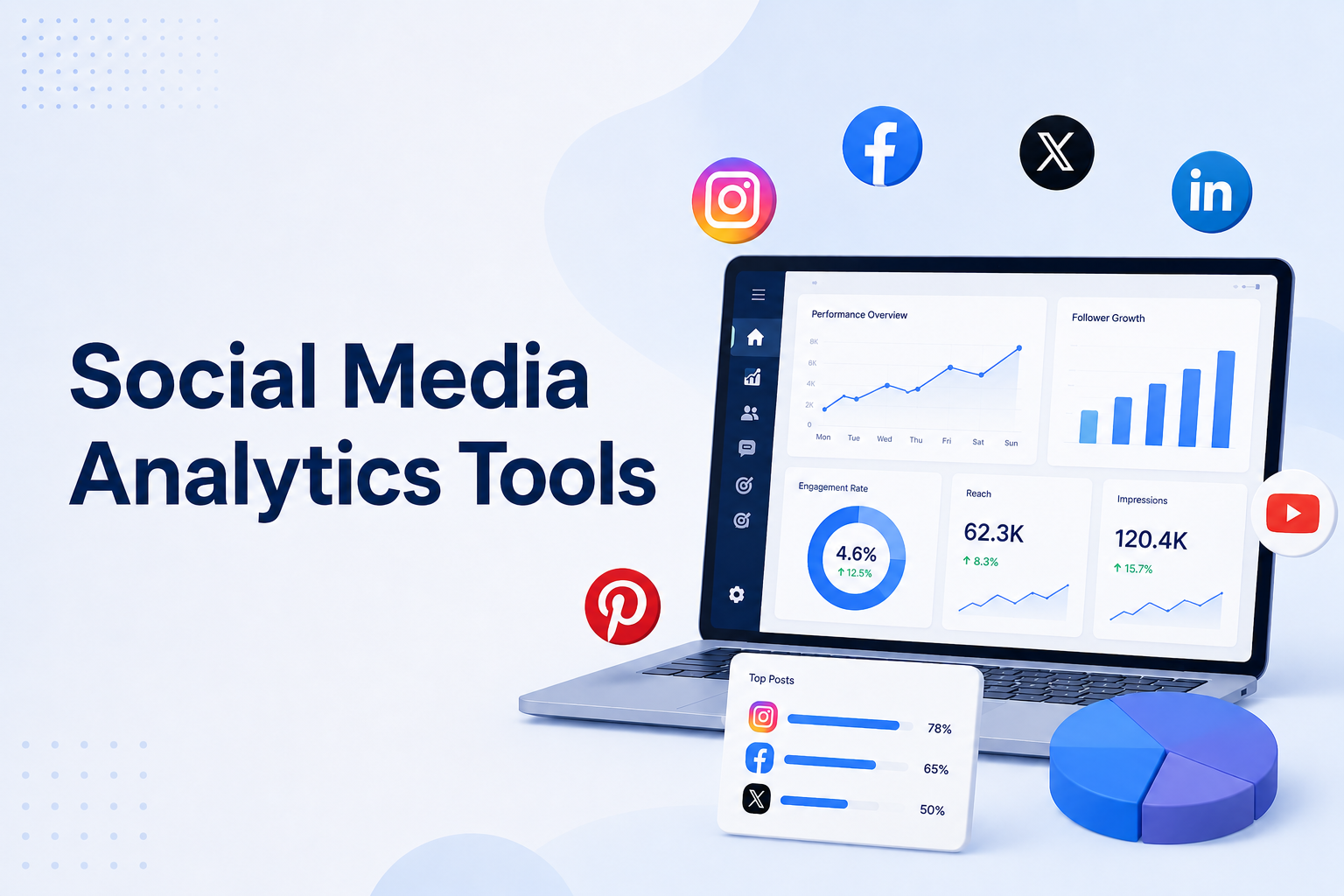
Marketing teams may post regularly but still find it hard to answer a key question: what is actually working? Without clear performance data, content choices are often just guesses. Social media analytics tools help modern businesses grow with confidence instead of relying on assumptions.
Today’s digital world is competitive. Brands post on many platforms, run campaigns, track engagement, and manage audiences. Without clear insights, all this effort can lose direction. Businesses need more than posting tools; they need systems that show audience behavior, content performance, and conversion impact.
Learning how social media analytics tools work and picking the right one can change how teams plan content, measure success, and get better results. This guide explains everything in a simple, practical way so businesses can make smarter choices and grow faster.
What are social media analytics tools?
Social media analytics tools are platforms that collect, measure, and interpret data from social networks. They help businesses understand how their content performs and how audiences interact with it.
Instead of manually checking likes or comments, these tools provide structured insights such as the following:
-
Engagement trends across posts and campaigns.
-
Audience demographics and behavior patterns.
-
Content reach and impressions.
-
Follower growth over time.
-
Performance comparison between platforms.
-
Conversion tracking from social channels.
For example, a marketing agency managing multiple clients can quickly see which campaigns generate the most engagement and adjust strategy in real time.
Why businesses need Social media analytics tools
Posting content without analytics is like driving a car without a dashboard. You keep moving, but you have no idea about your speed, direction, or how much fuel you have.
Modern businesses rely on social media analytics tools because they help solve real operational challenges:
-
Unclear content performance across platforms.
-
Difficulty identifying high-performing posts.
-
Wasted budget on low-impact campaigns.
-
Lack of audience understanding.
-
Inconsistent marketing decisions.
For small businesses and companies that are growing, these insights are essential. They help teams move from random posting to a more organized, data-driven approach.
Key benefits of Social media analytics tools
When used well, these tools can greatly improve marketing results and make businesses more efficient.
Better content decisions
Instead of guessing what works, teams can analyze real engagement data and adjust content accordingly.
Improved audience understanding
Businesses can identify what type of content their audience prefers, when they are active, and how they respond.
Higher marketing efficiency
Teams can focus their resources on strategies that work, instead of spending time on posts that do not get results.
Stronger campaign tracking
Marketing teams can track how their campaigns perform on different platforms, all in one place.
Smarter business growth
Using data-driven insights helps boost brand visibility, increase engagement, and improve conversion rates.
Many teams use social media analytics tools together with marketing automation software. This helps them connect insights to automated campaigns and get better results.
Important features to look for
To choose the right analytics tool, look for features that fit your marketing goals.
Key features include the following:
-
Multi-platform tracking for all social channels
-
Real-time performance dashboards.
-
Engagement and audience analysis.
-
Content comparison tools.
-
Reporting and export options.
-
AI-powered insights for smarter recommendations.
-
Integration with the best project management software for workflow coordination.
A good system should show you the data and also help you understand what it means.
Common problems solved by Social media analytics tools
Without analytics, marketing teams often run into hidden problems that slowly hurt their performance.
These tools help solve issues such as the following:
-
Lack of clarity on content success.
-
Inability to measure ROI from social campaigns.
-
Poor audience targeting decisions.
-
Disconnected marketing efforts across platforms.
-
Slow response to performance changes.
For example, a growing business might see fewer likes on Instagram but better results on LinkedIn. Analytics tools help spot these changes early so teams can adjust their strategy quickly.
How to choose the right solution
Not every tool works for every business. The best choice depends on your company’s size, goals, and how complex your workflow is.
Here is a simple way to decide:
-
Identify which platforms your audience uses most.
-
Check whether you need basic reporting or advanced AI insights.
-
Look for tools that integrate with existing systems.
-
Evaluate ease of use for your team.
-
Consider scalability for future growth.
The best social media analytics tools are not always the most complicated. The best tools make it easier to make decisions and help you work faster.
If your team is managing campaigns, content, and performance tracking together, choosing a unified system like this can help bring clarity.
Future trends in Social media analytics tools
Social media analytics is evolving quickly as platforms become more competitive and data-driven.
Key future trends include the following:
-
AI-powered content performance prediction.
-
Automated insights instead of manual reporting.
-
Deeper audience behavior tracking.
-
Real-time optimization of campaigns.
-
Integration with workflow and project systems.
-
Unified dashboards combining multiple data sources.
The rise of social media analytics tools and AI means businesses will soon rely more on intelligent recommendations rather than manual analysis.
Key Takeaways
-
Social media analytics tools help businesses measure and improve content performance.
-
Data-driven marketing reduces guesswork and improves efficiency.
-
Audience insights lead to better targeting and engagement.
-
Integration with workflow systems improves execution speed.
-
AI is shaping the future of analytics and marketing decisions.
FAQs
What are social media analytical tools?
Social media analytics tools are software platforms that track, measure, and analyze social media performance. They help businesses understand engagement, audience behavior, and content effectiveness, enabling better marketing decisions and improved business growth.
What are the 4 types of social media analytics?
The four main types are descriptive, diagnostic, predictive, and prescriptive analytics. Each type helps businesses understand past performance, identify causes, predict outcomes, and recommend actions for better results.
What is the 5-5-5 rule for social media?
The 5-5-5 rule is a content strategy approach in which users engage by liking, commenting, and sharing five posts each day across five different accounts over five days. It helps increase visibility and build organic engagement.
What are the big 4 of social media tools?
The big four typically refer to tools for publishing, analytics, listening, and engagement. Together, they help businesses manage content distribution, track performance, understand audience sentiment, and interact effectively.
Final Thoughts
Good marketing is no longer about posting more. It is about knowing what works. Social media analytics tools help businesses turn raw data into actionable insights and achieve better results over time.
When you use insights with organized workflows and better planning, you build a stronger base for digital growth. If your team wants to make marketing and performance tracking easier, trying a unified system could be a smart next step.
 Spanish
 English
 Arabic
 French
 Portuguese
 Deutsch
 Turkish
 Dutch
Dutch
 Italiano
 Russian
 Romaian
 Portuguese (Brazil)
 Greek
Greek
