


Natural Teeth Whitening Remedies: What Works, What Doesn't, and What Could Harm Your Enamel
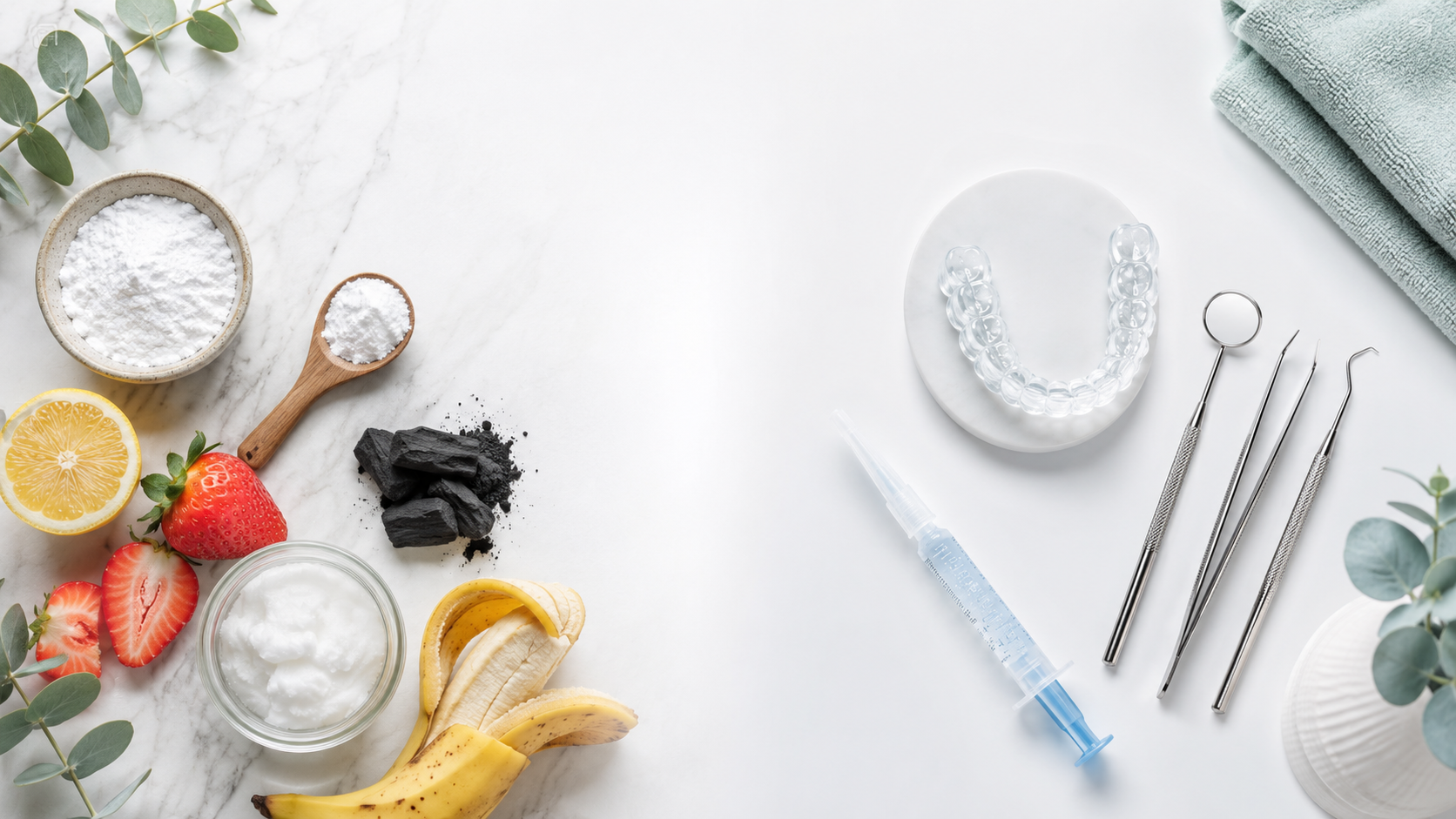
A bright, white smile has become one of the most requested cosmetic goals in dentistry, and it's no surprise that the internet is flooded with "natural" whitening hacks promising the same results as a dental office visit for a fraction of the cost. From baking soda scrubs to activated charcoal powders, oil pulling to strawberry mashes, these remedies circulate widely on social media and in home-remedy blogs. But how many of them actually work? And more importantly, which ones could quietly damage your teeth while you wait for results that never arrive?
This guide takes an honest, evidence-informed look at the most popular natural teeth whitening remedies, explains the science behind tooth discoloration in plain language, and helps you understand where home care ends and professional dentistry needs to begin.
Why Teeth Discolor in the First Place
Before evaluating any whitening remedy, it helps to understand what you're actually trying to fix. Tooth discoloration generally falls into two categories.
Extrinsic staining occurs on the outer surface of the enamel and is caused by everyday habits — drinking coffee, tea, red wine, or cola; smoking or using tobacco products; and the natural buildup of plaque and food pigments over time. This type of staining sits on top of the tooth and is the kind most natural remedies attempt to target.
Intrinsic discoloration happens beneath the enamel, within the dentin layer of the tooth. It can result from aging (enamel naturally thins and yellows over the years), certain medications taken during childhood, excessive fluoride exposure while teeth were forming, or trauma to a tooth. Intrinsic discoloration cannot be scrubbed, brushed, or rinsed away because it isn't on the surface at all — it's part of the tooth's internal structure.
This distinction matters enormously, because most natural remedies — even the ones that show some benefit — can only ever address extrinsic staining. If your discoloration is intrinsic, no amount of home treatment will change the underlying shade of your teeth.
Natural Remedies That Show Some Genuine Benefit
Not every home remedy is a myth. A few have a reasonable, plausible mechanism and some supporting rationale, even if their effects are modest compared to professional treatment.
Baking Soda
Baking soda (sodium bicarbonate) is mildly abrasive and slightly alkaline, which allows it to physically lift some surface stains and disrupt the environment where staining bacteria thrive. This is likely why it appears as an ingredient in many commercial whitening toothpastes at controlled, safe concentrations. Used occasionally and gently — not as a daily scrub — it can help reduce mild surface staining. The key caution is abrasiveness: enamel does not regenerate, so repeated aggressive brushing with baking soda, especially using a hard-bristled brush, can gradually wear it down.
Oil Pulling
Oil pulling, an Ayurvedic practice involving swishing coconut or sesame oil in the mouth for several minutes, has become a popular "natural whitening" trend. There is limited but reasonable evidence that oil pulling can reduce oral bacteria and improve gum health, which may indirectly support a cleaner-looking, brighter smile over time. However, dental consensus does not support the claim that oil pulling meaningfully changes tooth color. It's a reasonable addition to an oral hygiene routine, but it should not be relied upon as a whitening method on its own.
Improved Brushing and Diet Habits
This may sound too simple to count as a "remedy," but consistent, proper brushing combined with reducing staining foods and drinks is genuinely one of the most effective natural approaches available. Rinsing your mouth with water after consuming coffee, tea, or wine, and brushing twice daily with a soft-bristled brush, prevents new surface stains from setting in. This won't reverse years of existing discoloration, but it meaningfully slows the rate at which new staining accumulates.
Natural Remedies That Are Mostly Myths
Several widely shared remedies have little to no credible support behind them, despite their popularity online.
Lemon Juice and Other Acidic Fruits
Lemon, orange peel, and apple cider vinegar are frequently recommended for their "natural bleaching" properties. In reality, the citric and acetic acids in these ingredients do not whiten teeth — they erode enamel. As enamel thins from acid exposure, the yellowish dentin layer underneath becomes more visible, which can make teeth appear more discolored over time, not less. This is one of the more concerning myths precisely because it produces the opposite of the intended result while causing lasting damage.
Strawberry and Baking Soda Paste
A viral trend suggests mashing strawberries with baking soda to create a whitening paste, based on the presence of malic acid in strawberries. There is no reliable evidence that malic acid whitens teeth in any meaningful way. Worse, the natural sugars in strawberries can feed the same bacteria responsible for cavities, and combined with an abrasive baking soda base, this remedy offers questionable benefit with real downside potential for enamel and dental health.
Banana or Orange Peel Rubbing
The idea that rubbing the inside of a banana or orange peel on your teeth transfers "whitening minerals" like potassium, magnesium, or citric acid into the enamel has circulated widely, but there's no credible dental research supporting any actual whitening effect. At best, this remedy does nothing; at worst, repeated exposure to the citric acid in citrus peels contributes to enamel erosion.
Natural Remedies That Can Be Genuinely Harmful
Some popular trends go beyond simply "not working" and cross into territory that can actively damage your oral health.
Activated Charcoal
Activated charcoal toothpaste and powders have surged in popularity, marketed as a detoxifying, natural whitening solution. However, general dental consensus — including cautionary guidance from major dental associations — points to real concerns. Charcoal is highly abrasive, and its rough texture can wear down enamel with regular use. Once enamel is lost, it does not grow back, and thinner enamel often makes teeth look more yellow, since more of the dentin layer shows through. Charcoal products also lack sufficient long-term safety and efficacy research, and their gritty texture can even lodge in gumlines and crevices around existing dental work.
Hydrogen Peroxide (Undiluted, DIY Concentrations)
Hydrogen peroxide is genuinely a whitening agent — it's the same active ingredient used in many professional treatments. The problem is concentration and control. Professional whitening products use carefully calibrated, regulated percentages applied under supervision or through custom-fitted trays that protect gum tissue. DIY use of undiluted or high-concentration hydrogen peroxide, without professional guidance, can cause chemical burns to the gums, increased tooth sensitivity, and uneven whitening results.
Table Salt or Baking Soda Used as a Daily Abrasive Scrub
Occasional, gentle use is one thing; daily scrubbing with coarse salt or baking soda is another. Used aggressively or frequently, these abrasives can permanently thin enamel, leading to increased sensitivity to hot and cold, a more translucent or grayish tooth appearance, and greater vulnerability to cavities, since thinner enamel offers less natural protection.
Homemade Whitening "Strips" or Trays Without Fit Customization
Some online tutorials recommend creating DIY whitening trays or strips at home using kitchen ingredients. Without a proper, custom-fitted tray — the kind created from a dental impression — whitening gel can leak onto gum tissue, causing irritation or chemical burns, and the treatment ends up uneven, whitening some areas more than others.
Why Natural Remedies Have a Ceiling
Even the natural remedies with genuine, modest benefit share a common limitation: they can only ever address surface-level staining, and only mildly at that. None of them can lift intrinsic discoloration, none of them offer the calibrated strength or safety controls of professional whitening agents, and none of them are formulated with the balance of efficacy and enamel protection that dental-grade products are designed around.
This is where the gap between "natural" and "professional" becomes clearest. Professional whitening is not simply a stronger version of a natural remedy — it's a fundamentally different, clinically tested approach. Custom-fitted trays ensure whitening gel only touches the teeth, not gum tissue. Controlled concentrations of whitening agents are chosen specifically to maximize results while minimizing sensitivity. And a dentist can first evaluate why your teeth are discolored, which determines whether whitening will even be effective for your particular case, or whether an alternative cosmetic option is more appropriate.
When It's Time to Consider Professional Whitening
If you've tried consistent oral hygiene improvements and mild natural remedies without meaningful results, or if your discoloration seems to run deeper than surface staining, it's a sign that professional evaluation is worthwhile. This is especially true if you've noticed increased tooth sensitivity, visible enamel thinning, gum irritation, or uneven color from prior DIY attempts — all of which a dentist should assess before any further whitening is attempted.
Practices like Essentials Dental offer both take-home custom whitening kits and in-office professional whitening, giving patients a path that fits their comfort level, timeline, and budget without the guesswork or risk that comes with kitchen-ingredient formulas. Their cosmetic dentistry services are specifically designed to deliver gradual, low-sensitivity results through custom trays and professional-grade gel for those who prefer an at-home approach, as well as same-visit, noticeably lighter results for patients who want faster outcomes through in-office treatment.
A professional evaluation also catches something home remedies can't: whether your discoloration is a cosmetic issue at all, or a sign of something else, such as enamel erosion, an old filling discoloring from within, or a cavity forming beneath the surface. Whitening without that diagnostic step means potentially masking a problem rather than solving it.
A Balanced Takeaway
Natural teeth whitening remedies occupy a wide spectrum. Some, like consistent brushing habits and moderate use of baking soda, offer mild, genuine benefit with low risk. Others, like lemon juice, strawberry pastes, and banana peels, are largely ineffective myths that do little more than waste time. And a concerning few — particularly activated charcoal, undiluted hydrogen peroxide, and daily abrasive scrubbing — carry real potential to damage enamel, increase sensitivity, and ultimately leave your smile looking worse rather than better.
The safest approach is to treat natural remedies as a supplement to good oral hygiene, not a replacement for professional care. If your goal is a noticeably brighter, more even smile, a consultation with a cosmetic dentist remains the most reliable way to get there safely, with results tailored to your specific type of discoloration rather than a one-size-fits-all kitchen recipe.
Whether you're just starting to explore your whitening options or you've already tried a few home remedies without success, a professional consultation can help you understand what's realistic for your smile and which path — take-home trays, in-office whitening, or another cosmetic option entirely — will get you there safely.
 Dutch
Dutch
 English
 Arabic
 French
 Spanish
 Portuguese
 Deutsch
 Turkish
 Italiano
 Russian
 Romaian
 Portuguese (Brazil)
 Greek
Greek
