


The Steel Fortress: Why Container Transport is the Ultimate Choice for Your Vehicle
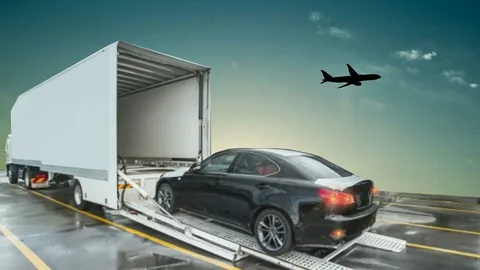
When it comes to shipping a vehicle across an ocean, not all methods are created equal. The casual observer might assume that all cars simply drive onto a ship and drive off at the destination. But for those who truly care about the condition, security, and privacy of their automobile, there is a superior path. That path is container transport, a method that transforms a routine shipment into a fortress protected journey. For any car owner who has ever worried about scratches, weather exposure, or simple peace of mind, understanding container transport is not just useful. It is essential.
A shipping container is a humble object. It is a rectangular steel box, usually twenty or forty feet long, with corrugated walls and heavy locking doors. But inside that unassuming exterior lies a world of protection that no open deck can match. When your vehicle rolls into a container, it leaves behind the chaos of shared transport and enters a private, secure, and controlled environment. From the moment those doors close to the moment they open at your destination, your car exists in its own steel world, untouched by the risks that plague other shipping methods.
Privacy and Protection in a Shared World
The most obvious difference between container transport and other methods is privacy. On a traditional roll on roll off vessel, your vehicle is driven onto an open deck and parked in tight rows alongside hundreds of other cars. Professional drivers maneuver in close quarters. Other vehicles drip oil and coolant. Forklifts carrying heavy equipment weave through narrow gaps. The ship rolls with ocean swells, and every car shifts slightly against its restraints. For a standard sedan or a durable SUV, this environment is acceptable. But for a vehicle you truly love, the shared deck introduces risks that are entirely avoidable.
Container transport eliminates every one of those risks. Your vehicle is loaded into a container at a secure facility, often using a gentle ramp that respects even the lowest ground clearance. Once inside, it is secured to the container floor using professional grade straps and wooden blocking. Then the doors close. What happens next is remarkable in its simplicity: nothing touches your car. No other vehicles park nearby. No forklifts pass by. No strangers walk past. The car simply rests inside its steel bubble, protected from every hazard except the gentle, predictable motion of the ship itself.
That privacy extends beyond physical protection to simple peace of mind. When you ship via container, you know exactly where your car is at all times. You know that no one is swinging a door into its side. No one is spilling coffee on its roof. No one is backing a bulldozer within inches of its bumper. The container is your vehicle's private room, and no one else is invited inside.
The Hidden Advantages You Never Knew You Needed
While protection is the headline benefit of container transport, the supporting advantages are equally compelling. Consider the ability to ship personal belongings inside your vehicle. On a roll on roll off vessel, the car must be completely empty. No luggage, no tools, no household items. Container transport has no such restriction. A family relocating overseas can pack their SUV with clothing, books, kitchen items, and children's toys, effectively using the vehicle as both transportation and moving container. The remaining space around the car can be filled with additional boxes, creating a single combined shipment that simplifies logistics and reduces the number of deliveries to coordinate.
Consider also the flexibility of arrival. When a roll on roll off ship reaches port, every vehicle must be driven off immediately to make room for incoming cargo. If you are not ready to receive your car, it goes to an outdoor storage lot, exposed to weather and potential damage. With container transport, your vehicle can remain inside the container for days or even weeks after arrival. The container is simply lifted off the ship and placed in a secure terminal yard. Your car stays protected, clean, and private until you are ready to take delivery. This flexibility is invaluable for international moves where your own arrival date may be uncertain.
For those shipping to remote or developing regions, container transport offers another critical advantage: security. Ports with limited infrastructure or high crime rates pose serious risks to vehicles parked on open decks. A container, by contrast, can be sealed with a tamper evident lock and tracked through every stage of its journey. Theft becomes nearly impossible. Pilferage of loose items is completely prevented. Even simple vandalism is deterred because accessing the vehicle requires breaking a seal that will be immediately noticed. In high risk environments, container transport is not a luxury. It is a necessity.
When Container Transport Becomes the Only Choice
Not every vehicle needs container transport, but certain situations make it the only responsible choice. Classic cars with original paint that cannot be color matched or touch up repaired should never share an open deck with vehicles that may leak fluids or swing doors. Exotic sports cars with carbon fiber bodywork and front splitters that sit inches above the ground may not even be able to navigate the steep ramps of a roll on roll off vessel. Convertibles with fabric tops are vulnerable to wind, salt spray, and bird droppings. For these vehicles, container transport is not an upgrade. It is the minimum acceptable standard.
High value vehicles of any kind also point toward container transport. A brand new luxury SUV, a restored American muscle car, a European touring sedan, or a customized off road build, all represent significant financial and emotional investment. The added cost of container transport, while real, is typically a small fraction of the vehicle's value. When weighed against the peace of mind that comes from knowing your car is alone in a steel box rather than packed among strangers, that cost becomes trivial. You are not paying for shipping. You are paying for certainty.
Even for more ordinary vehicles, container transport can make sense in specific circumstances. A family minivan packed with personal belongings for an international move. A work truck carrying expensive tools and equipment. A vehicle being shipped in winter across the North Atlantic where salt spray and freezing spray are constant threats. In each case, the container provides protection that no open deck can offer.
The Loading Process: Precision Over Convenience
Loading a vehicle into a container requires more skill than driving onto a roll on roll off vessel, but the results are worth the extra care. The interior width of a standard container is just over seven and a half feet, leaving only inches of clearance on each side of most cars. The driver who loads the vehicle must be precise, guided by spotters and sometimes by mirrors. Once the car is inside, the doors cannot be opened fully, meaning the driver exits through a partially opened door or even a window. For non running vehicles, the process involves winches and dollies, adding complexity but remaining entirely manageable for experienced handlers.
Securing the vehicle inside the container is equally meticulous. Professional loaders use heavy duty ratchet straps attached to steel tie down rings welded into the container floor. Wooden chocks are hammered tight against each tire. The vehicle's suspension is compressed slightly to reduce bounce during the voyage. Vulnerable areas like side mirrors and front spoilers receive additional padding. When the process is complete, the car cannot move a fraction of an inch in any direction, regardless of how much the ship rolls.
The doors close. The seal is applied. And your vehicle begins its journey across the ocean inside a steel fortress. That is the promise of container transport, and for those who truly care about their cars, it is the only promise worth accepting.
 Dutch
Dutch
 English
 Arabic
 French
 Spanish
 Portuguese
 Deutsch
 Turkish
 Italiano
 Russian
 Romaian
 Portuguese (Brazil)
 Greek
Greek
