


How Jewellery Represents Status, Culture, and Heritage in India
Introduction
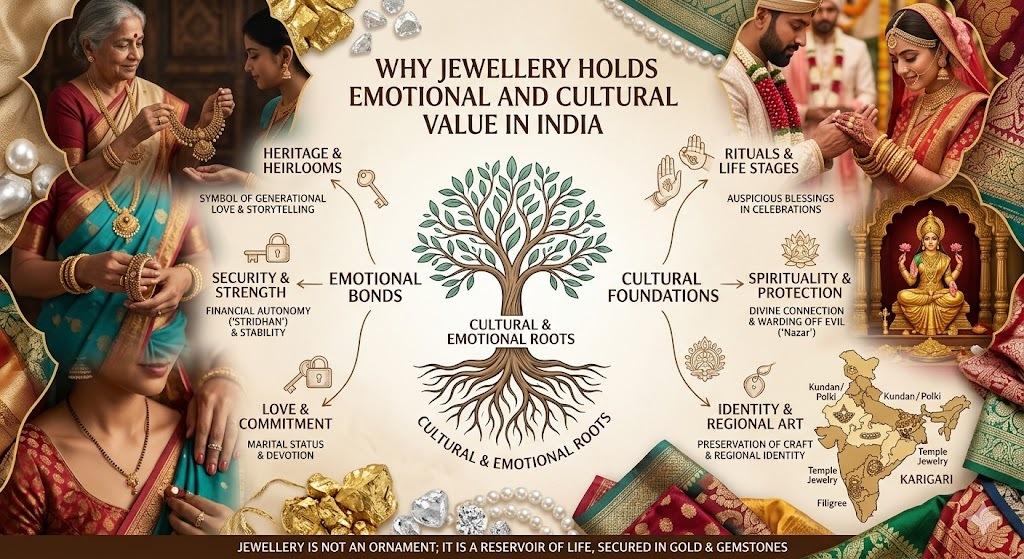
In India, jewellery is far more than just an accessory—it is a powerful symbol of identity, tradition, and social standing. From ancient civilizations to modern-day fashion, jewellery has consistently played a central role in shaping cultural narratives. The importance of jewellery in India goes beyond aesthetics; it reflects heritage, signifies status, and preserves age-old customs.
Whether it’s a bride adorned in gold on her wedding day or a child wearing a simple silver anklet, jewellery is deeply woven into the fabric of Indian life. This blog explores how jewellery represents status, culture, and heritage in India, and why it continues to hold such immense value even in 2026.
The Historical Significance of Jewellery in India
India’s relationship with jewellery dates back thousands of years. Archaeological findings from the Indus Valley Civilization reveal that people wore ornaments made of gold, silver, beads, and precious stones.
Historically, jewellery was:
-
A symbol of wealth and power
-
Used in religious rituals
-
A marker of social hierarchy
Kings and queens wore elaborate ornaments to display authority, while common people used simpler designs. Over time, jewellery evolved but retained its symbolic importance.
Jewellery as a Symbol of Status
One of the most prominent aspects of the importance of jewellery in India is its association with social status.
1. Wealth and Financial Security
Gold jewellery, in particular, is considered a form of investment in Indian households. Families often accumulate gold over generations, making it a symbol of financial stability.
-
Gold is seen as liquid wealth
-
It acts as a financial backup in emergencies
-
It represents economic strength
2. Social Recognition
In many communities, the type and quantity of jewellery worn reflect one’s social standing.
-
Heavy gold sets = affluence
-
Diamond jewellery = modern luxury
-
Antique jewellery = heritage wealth
Even today, weddings and festivals become occasions to showcase status through jewellery.
3. Marital Status Indicators
Jewellery also signifies marital status, especially for women.
-
Mangalsutra – symbol of marriage
-
Toe rings (Bichiya) – worn by married women
-
Bangles – signify prosperity and marital bliss
These pieces are not just decorative—they carry deep emotional and societal meaning.
Cultural Diversity Reflected Through Jewellery
India’s diversity is beautifully expressed through its jewellery styles. Each region has its own unique designs, materials, and traditions.
1. North India
-
Kundan and Polki jewellery
-
Heavy bridal sets
-
Maang tikka and nose rings
These pieces are often associated with royal heritage.
2. South India
-
Temple jewellery inspired by deities
-
Gold dominates the designs
-
Intricate craftsmanship
Jewellery here is deeply connected to spirituality.
3. East India
-
Lightweight gold jewellery
-
Filigree work (especially in Odisha)
-
Traditional designs with cultural motifs
4. West India
-
Silver jewellery in Rajasthan and Gujarat
-
Tribal ornaments
-
Bold and artistic designs
This regional diversity highlights the importance of jewellery as a cultural identifier.
Jewellery and Indian Traditions
Jewellery plays a crucial role in almost every Indian tradition and ceremony.
1. Weddings
Indian weddings are incomplete without jewellery. Bridal jewellery is not just about beauty—it symbolizes:
-
Prosperity
-
Blessings
-
Family heritage
Brides often wear heirloom jewellery passed down through generations, connecting them to their roots.
2. Festivals
Festivals like Diwali, Akshaya Tritiya, and Dhanteras emphasize buying gold and silver.
-
Considered auspicious
-
Symbolizes prosperity and good fortune
-
Strengthens cultural practices
3. Religious Significance
Jewellery is often offered to deities in temples, reflecting devotion and faith. Many ornaments are inspired by religious symbols and mythology.
Jewellery as a Representation of Heritage
One of the strongest aspects of the importance of jewellery is its role in preserving heritage.
1. Generational Legacy
Jewellery is often passed down as family heirlooms.
-
Connects generations
-
Carries emotional value
-
Preserves family history
2. Traditional Craftsmanship
India is home to skilled artisans who have mastered jewellery-making techniques over centuries.
-
Meenakari (enamel work)
-
Kundan (stone setting)
-
Jadau (royal craftsmanship)
These techniques represent India’s rich artistic heritage.
3. Cultural Identity
Jewellery often reflects one’s community and traditions.
-
Tribal jewellery represents indigenous cultures
-
Regional designs signify local heritage
-
Specific ornaments identify cultural groups
The Modern Evolution of Jewellery in India
While tradition remains strong, jewellery in India has evolved with time.
1. Fusion of Tradition and Modernity
Modern designs combine traditional elements with contemporary styles.
-
Lightweight jewellery for daily wear
-
Minimalist gold designs
-
Fusion bridal sets
2. Rise of Diamond and Platinum
Urban consumers are shifting towards:
-
Diamond jewellery for elegance
-
Platinum for modern appeal
However, gold still dominates due to its cultural importance.
3. Digital Influence and E-commerce
With the rise of online platforms:
-
Jewellery shopping has become more accessible
-
Customization options have increased
-
Trends spread faster through social media
Emotional and Psychological Value of Jewellery
Beyond material value, jewellery holds deep emotional significance.
1. Sentimental Attachment
Jewellery often marks important life events:
-
Weddings
-
Births
-
Anniversaries
These pieces become cherished memories.
2. Expression of Identity
People use jewellery to express:
-
Personal style
-
Cultural pride
-
Individual personality
3. Confidence and Empowerment
Wearing jewellery can enhance confidence and self-expression, especially in modern contexts.
Jewellery as an Investment
The importance of jewellery in India is also tied to its financial value.
1. Gold as a Safe Investment
-
Stable value over time
-
Protection against inflation
-
High resale value
2. Increasing Demand
India remains one of the largest consumers of gold globally, highlighting its enduring importance.
Sustainability and Ethical Jewellery Trends
In recent years, there has been a shift towards sustainable jewellery.
1. Ethical Sourcing
Consumers are becoming aware of:
-
Conflict-free diamonds
-
Responsible mining practices
2. Eco-Friendly Designs
-
Recycled gold
-
Lab-grown diamonds
-
Sustainable packaging
This shift reflects changing values while maintaining the cultural significance of jewellery.
Why Jewellery Will Always Matter in India
Despite modernization, jewellery continues to hold its place in Indian society.
Here’s why:
-
It preserves tradition and heritage
-
It symbolizes status and wealth
-
It reflects cultural diversity
-
It holds emotional and sentimental value
-
It serves as a financial asset
The importance of jewellery in India is timeless—it adapts to change while staying rooted in tradition.
Conclusion
Jewellery in India is not just about adornment—it is a reflection of identity, culture, and history. From symbolizing social status to preserving centuries-old traditions, jewellery plays a vital role in Indian life.
As India continues to modernize, jewellery evolves in style and form, but its essence remains unchanged. It continues to connect generations, celebrate culture, and represent the rich heritage of the country.
In a world that is constantly changing, jewellery stands as a timeless reminder of India’s traditions, values, and legacy.
 French
 English
 Arabic
 Spanish
 Portuguese
 Deutsch
 Turkish
 Dutch
Dutch
 Italiano
 Russian
 Romaian
 Portuguese (Brazil)
 Greek
Greek
