


Calculating The True Cost Of Poor Site Access In Earthmoving
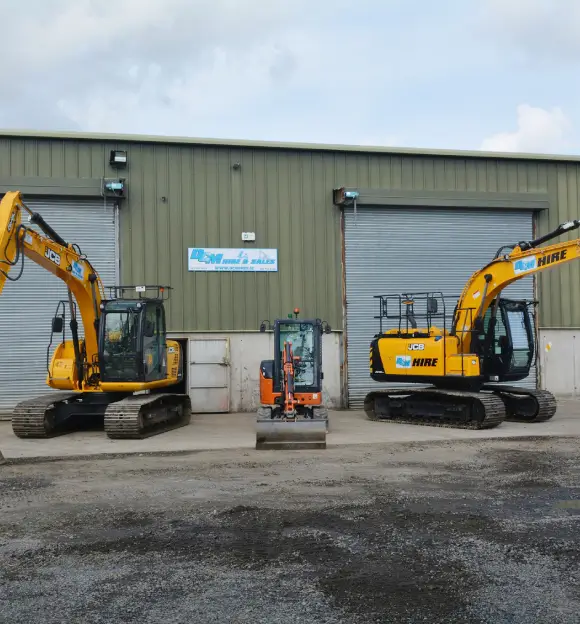
Pricing a major commercial earthworks contract is a high-risk mathematical exercise. The quantities of soil to be cut, filled, or exported are usually clear on the engineer's drawings, allowing estimators to calculate the required machine hours easily. However, the most frequent reason contractors lose money on these jobs is failing to account for the physical reality of the site access. An estimator might price a job assuming large, articulated transport machines can run a fast, uninterrupted cycle. If the site actually features a narrow, winding entrance, steep access ramps, or a single-lane haul road, that fast cycle time completely collapses. The machinery is forced to slow down, wait in queues, or carry reduced payloads to navigate the bottlenecks safely. These delays multiply across hundreds of loads, bleeding the profit margin dry. Identifying restricted access early and securing the correct, highly manoeuvrable Dumper Hire in Carlow is the only way to price the job accurately and protect your commercial return.
The width of the site entrance is the first major logistical choke point. Many commercial developments, particularly those in established industrial estates or expanding towns, have very tight access gates bordered by existing buildings or busy public roads. If the entrance is too narrow for two large machines to pass each other, you immediately introduce a massive delay into your transport cycle. One machine must wait on the public road while the other exits, causing traffic chaos and slowing down the entire earthmoving operation. In these scenarios, pricing the job using a larger fleet of slightly smaller, more agile machines is often much more cost-effective. These machines can pass each other safely, maintaining a continuous flow of material and keeping the excavators working at maximum capacity.
Internal haul roads are another common source of hidden costs. On large sites, the transport route from the excavation area to the stockpile can stretch for nearly a kilometre. If this temporary road is narrow, features sharp 90-degree corners, or has a poor surface, the transport machinery cannot operate at efficient speeds. Articulated machines are excellent for navigating sharp corners, but if the road surface is deeply rutted mud, they will still struggle for traction and speed. The estimator must accurately assess the cost of constantly grading and maintaining these haul roads against the cost of the slower cycle times. Often, investing in better temporary road surfaces or using tracked transport machinery on the worst sections proves to be the most profitable strategy in the long run.
The location of the muck-away loading zone dictates the speed of the final soil export. If the transport machinery has to cross an active section of the construction site, dodging steel deliveries and ground workers to reach the road haulage trucks, the cycle time will be agonizingly slow and highly dangerous. The loading zone must be situated as close to the site entrance as safely possible, and it must offer plenty of space for the site machines to tip their loads quickly without waiting for the lorries to reposition. Swivel-tip machines are incredibly valuable here, as they can pull up alongside the stockpile and tip sideways, requiring much less space to operate and keeping the loading zone flowing smoothly.
Accurate pricing requires a deeply realistic view of how the heavy machinery will actually move around the physical site. Estimators must walk the site, measure the pinch points, and visualize the transport cycle in real-time. By identifying access restrictions early, contractors can select the specific machinery that overcomes those obstacles, rather than forcing oversized equipment into spaces where it cannot perform efficiently. This accurate, site-specific approach to equipment planning ensures the tender price reflects the reality of the work, guaranteeing a profitable outcome for the earthmoving contractor.
Conclusion
Failing to accurately assess site access restrictions is the leading cause of financial loss on commercial earthmoving contracts. Narrow entrances, tight corners, and poor haul roads drastically reduce the operating speed of heavy transport machinery, destroying the calculated cycle times. By identifying these logistical bottlenecks early, estimators can specify highly manoeuvrable, appropriately sized equipment that maintains a fast, continuous material flow. Accurate equipment planning based on physical site realities protects the profit margin on complex groundworks.
Call to Action
Ensure your commercial earthmoving tenders are priced accurately by securing the right equipment for your specific site access. Review our extensive fleet of agile, articulated transport machinery designed to maintain high production rates in restricted environments.

 English
 Arabic
 French
 Spanish
 Portuguese
 Deutsch
 Turkish
 Dutch
Dutch
 Russian
 Romaian
 Portuguese (Brazil)
 Greek
Greek
