


Pseudocyesis (False Pregnancy): Causes & Treatment
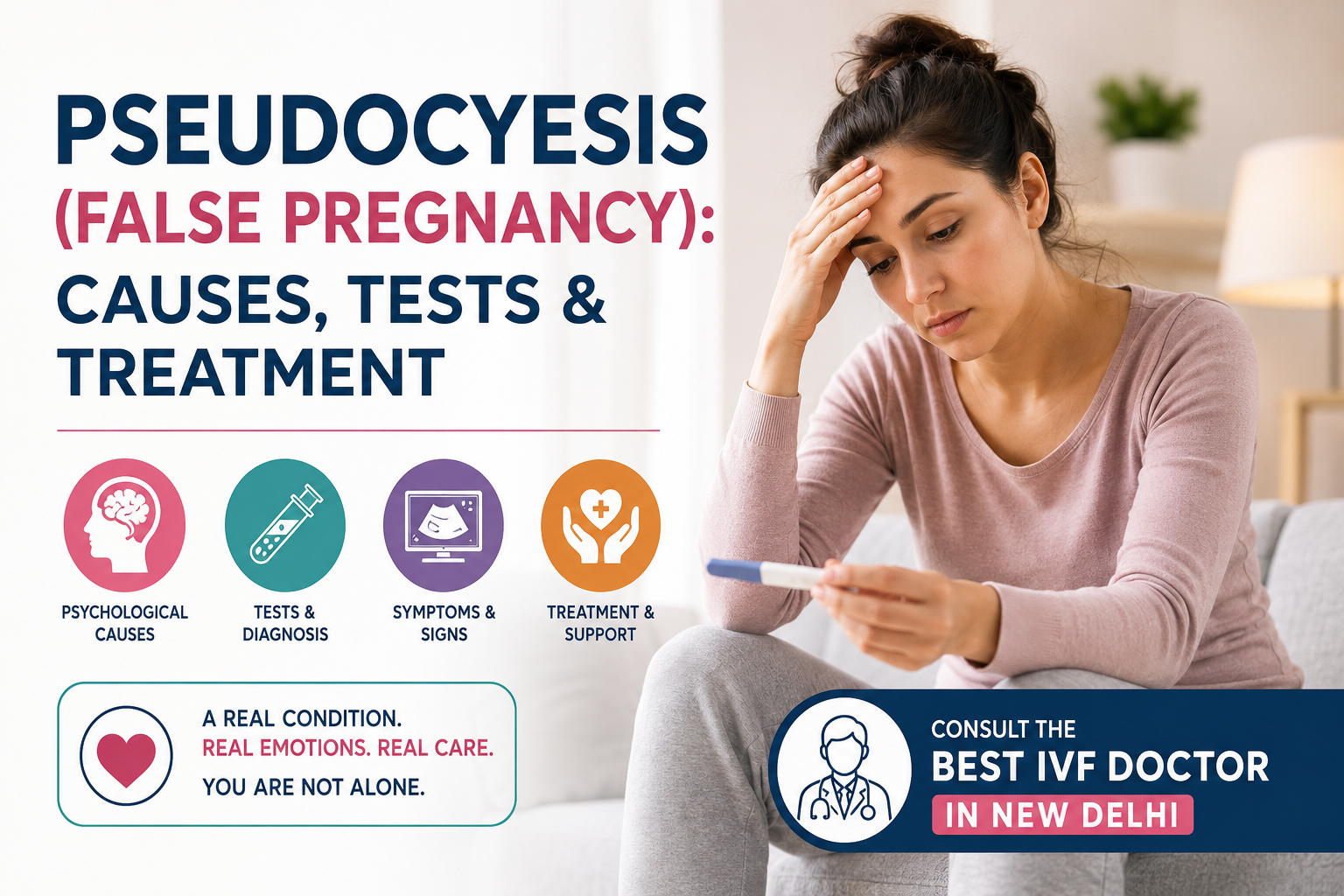
Imagine preparing your life for a baby—feeling pregnancy symptoms, missing periods, and even noticing belly growth—only to discover that there is no actual pregnancy. Sounds shocking, right? This condition is called Pseudocyesis, also known as False Pregnancy.
Although rare, pseudocyesis is a very real medical and emotional condition. A woman experiencing it is not “pretending.” Her mind and body genuinely react as though pregnancy has occurred. It’s like the brain becomes the director of a movie, and the body follows the script completely.
For many couples trying to conceive, especially those undergoing fertility treatments or searching for the best ivf doctor in new delhi understanding conditions like pseudocyesis can help reduce fear, confusion, and emotional stress.
In this article, we’ll break down everything you need to know about pseudocyesis in simple language—from causes and symptoms to diagnosis, treatment, and emotional recovery.
1. What is Pseudocyesis?
Pseudocyesis, or false pregnancy, is a condition in which a woman strongly believes she is pregnant and even develops physical signs of pregnancy despite not carrying a baby.
This is not simply wishful thinking. The body may actually show symptoms such as:
- Missed periods
- Enlarged abdomen
- Breast changes
- Nausea
- Weight gain
- Feeling fetal movements
In many cases, the symptoms can feel so real that even close family members believe the woman is pregnant.
2. How Common is False Pregnancy?
False pregnancy is considered rare today because modern pregnancy tests and ultrasounds can quickly confirm whether pregnancy exists.
However, it can still occur, especially in women who:
- Are struggling with infertility
- Have experienced repeated miscarriages
- Are under emotional stress
- Strongly desire pregnancy
- Fear pregnancy intensely
Historically, pseudocyesis was more common when medical technology was limited.
3. Difference Between False Pregnancy and Real Pregnancy
Understanding the difference is important.
| Feature | Real Pregnancy | False Pregnancy |
|---|---|---|
| Baby present | Yes | No |
| Ultrasound heartbeat | Present | Absent |
| Pregnancy hormones | Positive | Usually negative |
| Physical symptoms | Present | Present |
| Emotional belief | Present | Very strong |
The biggest difference is that there is no fetus developing inside the uterus in pseudocyesis.
4. Common Symptoms of Pseudocyesis
The symptoms can closely mimic actual pregnancy.
Missed Menstrual Periods
Many women stop getting periods for weeks or months.
Swollen Abdomen
The stomach may enlarge due to fat buildup, posture changes, or gas.
Breast Changes
Breasts may become tender or enlarged. Some women even produce milk.
Morning Sickness
Nausea and vomiting can occur just like in early pregnancy.
Weight Gain
Hormonal and emotional changes may lead to noticeable weight increase.
Feeling Baby Movements
Some women report sensations similar to fetal kicks.
The body and mind are deeply connected. When emotions become intense, physical symptoms may follow.
5. Emotional and Psychological Causes
The emotional side of pseudocyesis is extremely important.
Strong Desire for Pregnancy
Women trying to conceive for years may unconsciously convince themselves they are pregnant.
Fear of Infertility
The stress of infertility can deeply affect mental health.
Loss or Trauma
Past miscarriages, stillbirths, or emotional trauma may trigger false pregnancy.
Depression and Anxiety
Mental health conditions sometimes play a major role.
Relationship or Social Pressure
In some cultures, women may face pressure to become mothers, increasing emotional distress.
It’s similar to how stress can cause headaches or stomach pain. In pseudocyesis, emotional pressure influences the reproductive system.
6. Physical and Hormonal Causes
Psychological factors are not the only cause. Hormonal changes can also contribute.
Hormonal Imbalance
Changes in hormones like estrogen and prolactin may trigger pregnancy-like symptoms.
Pituitary Gland Issues
The pituitary gland controls many reproductive hormones.
Weight Changes
Obesity or sudden weight gain can mimic pregnancy signs.
Medical Conditions
Certain tumors or ovarian cysts may produce symptoms similar to pregnancy.
This is why proper medical testing is very important.
7. Who is at Higher Risk?
Certain women may be more vulnerable to pseudocyesis.
Women with infertility struggles
Women undergoing fertility treatment
Women with repeated miscarriages
Women experiencing emotional stress
Women nearing menopause
Women with psychiatric conditions
Patients seeking help from the best ivf doctor in new delhi are often emotionally invested in becoming parents, making emotional counseling equally important during fertility care.
8. How Doctors Diagnose False Pregnancy
Doctors use several methods to confirm the condition.
Medical History
The doctor asks about symptoms, menstrual cycles, emotional stress, and fertility history.
Physical Examination
A pelvic exam checks for signs of actual pregnancy.
Blood and Urine Tests
Pregnancy hormone levels are measured.
Ultrasound Scan
An ultrasound is the most reliable way to confirm whether a fetus is present.
When no baby is seen on the ultrasound, pseudocyesis may be diagnosed.
9. Pregnancy Tests and Ultrasound Findings
Urine Pregnancy Test
Usually negative in pseudocyesis.
Blood hCG Test
Measures pregnancy hormone levels accurately.
Ultrasound Results
No fetus, heartbeat, or placenta appears.
Seeing the ultrasound often becomes the turning point for patients because it clearly shows the absence of pregnancy.
However, doctors must communicate carefully and compassionately because the emotional impact can be devastating.
10. Treatment Options for Pseudocyesis
Treatment focuses on both physical and emotional healing.
Medical Explanation
Doctors gently explain the diagnosis using imaging and test results.
Hormonal Treatment
If hormone imbalance exists, medication may help restore normal cycles.
Psychological Therapy
Counseling is often necessary.
Stress Management
Relaxation techniques and emotional support are beneficial.
Treatment for Underlying Conditions
Depression, anxiety, or other mental health concerns may require therapy or medication.
The goal is not just to “prove” there is no pregnancy, but to help the woman emotionally recover.
11. Emotional Support and Counseling
This condition can feel heartbreaking. Many women feel embarrassed, confused, or emotionally shattered after diagnosis.
Why Counseling Matters
Therapy helps patients:
- Process grief
- Manage stress
- Address fertility anxiety
- Improve emotional health
Partner and Family Support
A supportive environment makes recovery easier.
Avoid blaming or mocking the person. False pregnancy is a genuine medical condition—not attention-seeking behavior.
12. Can False Pregnancy Affect Fertility?
Pseudocyesis itself usually does not directly cause infertility.
However, the underlying emotional or hormonal issues may affect reproductive health.
Women experiencing fertility challenges should consult qualified reproductive specialists for proper evaluation.
If conception difficulties continue, fertility experts may recommend:
- Ovulation tracking
- Hormonal testing
- Fertility medications
- IVF treatment
13. Role of Fertility Specialists and IVF Experts
Fertility specialists play a major role in identifying emotional and physical reproductive concerns.
The best ivf doctor in new delhi not only focuses on pregnancy success but also supports patients emotionally during fertility journeys.
Why IVF Experts Matter
Experienced fertility doctors can:
- Diagnose infertility causes
- Offer counseling support
- Prevent emotional burnout
- Recommend proper treatment plans
Holistic Fertility Care
Modern fertility clinics increasingly include psychologists and counselors to support mental well-being.
This balanced approach helps patients cope with disappointment, stress, and anxiety more effectively.
14. How Family Members Can Help
Family support is incredibly important.
Listen Without Judgment
Allow the person to express emotions openly.
Avoid Harsh Comments
Statements like “It was all in your head” can worsen emotional pain.
Encourage Professional Help
Counseling and medical care should be encouraged gently.
Offer Emotional Stability
Simple acts of kindness can make recovery easier.
Think of emotional support as a safety net—it helps prevent deeper emotional collapse during difficult times.
15. Prevention and Mental Wellness Tips
While pseudocyesis cannot always be prevented, emotional wellness may reduce risk.
Manage Stress
Meditation, exercise, and relaxation techniques help.
Seek Early Counseling
Women struggling with infertility should consider emotional support early.
Build Healthy Communication
Talking openly with partners and doctors reduces emotional pressure.
Avoid Self-Diagnosis
Always confirm pregnancy through medical testing.
Choose Trusted Fertility Care
Working with experienced specialists can improve both emotional and reproductive outcomes.
16. Conclusion
Pseudocyesis, or false pregnancy, is a rare but deeply emotional condition where the body and mind work together to create real pregnancy symptoms without an actual fetus.
For women dealing with infertility, pregnancy loss, or emotional stress, the experience can feel overwhelming. But with proper diagnosis, counseling, medical care, and family support, recovery is absolutely possible.
Modern fertility care is not only about technology—it’s also about compassion. Whether someone is seeking emotional support or consulting the best ivf doctor in new delhi, understanding the connection between mental and physical health is essential for overall well-being.
No woman should feel ashamed of experiencing pseudocyesis. Awareness, empathy, and proper treatment can make a huge difference.
FAQs
1. Is pseudocyesis a mental illness?
Pseudocyesis is not purely a mental illness. It involves both psychological and physical factors that create pregnancy-like symptoms.
2. Can a pregnancy test be positive in false pregnancy?
Usually, pregnancy tests are negative, but rare hormonal issues may sometimes affect results.
3. How long can pseudocyesis last?
It can last for weeks, months, or even longer if not diagnosed properly.
4. Can stress really cause pregnancy symptoms?
Yes. Emotional stress can affect hormones and trigger physical symptoms similar to pregnancy.
5. Should women with pseudocyesis see a fertility specialist?
Yes. A fertility specialist or the best ivf doctor in new delhi can help evaluate reproductive health and provide emotional guidance.

 English
 Arabic
 French
 Spanish
 Portuguese
 Deutsch
 Turkish
 Dutch
Dutch
 Italiano
 Russian
 Portuguese (Brazil)
 Greek
Greek
