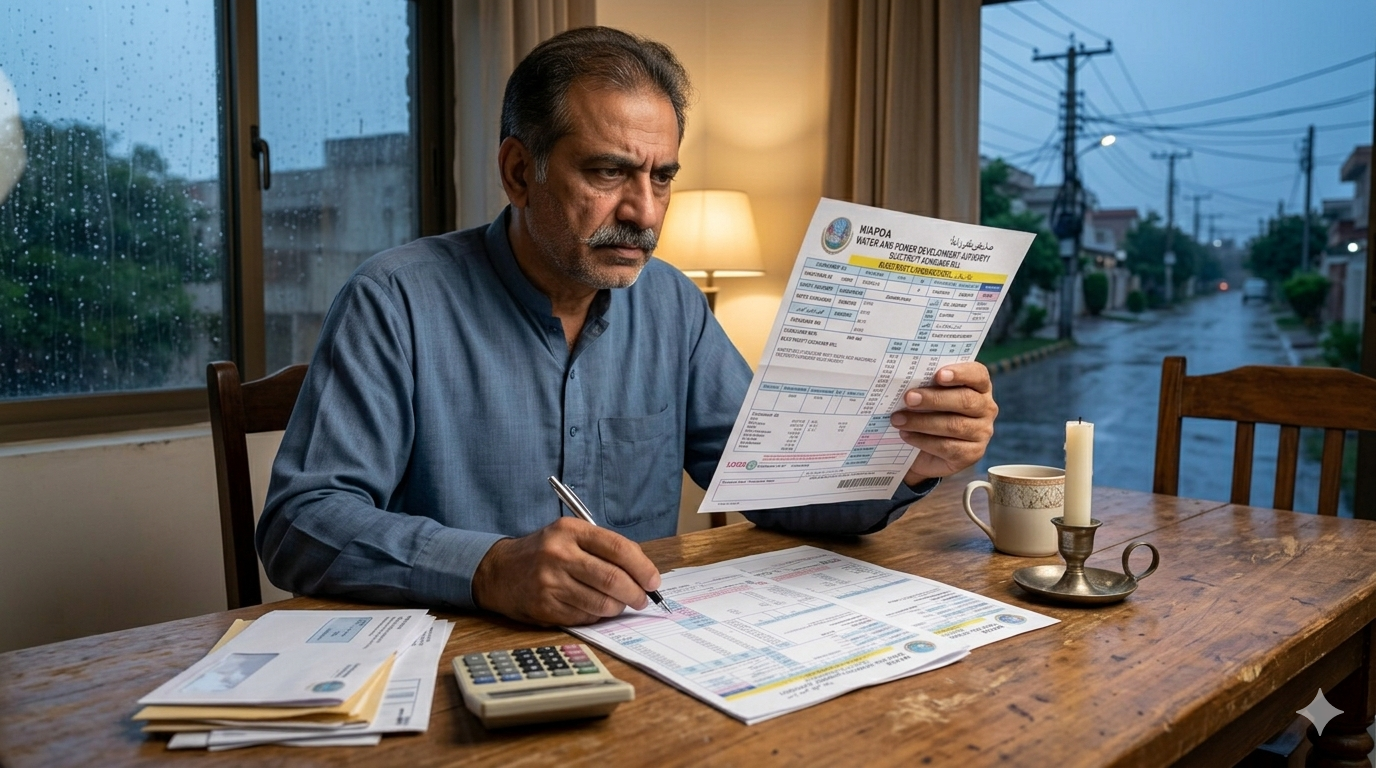
Electricity bills in Pakistan are becoming harder to manage for almost every household. People open their monthly Wapda Bill expecting a normal amount, but the final figure usually feels much higher than expected. In many homes, electricity usage stays almost the same, yet the bill continues increasing month after month. This situation creates confusion because most consumers believe they only pay for electricity units. In reality, a large part of the bill comes from taxes, fuel adjustments, and additional charges.
The discussion around electricity bill taxes Pakistan consumers pay has become common because people now realize that the actual electricity cost is only one part of the total amount. Government taxes, surcharges, quarterly adjustments, and fuel price differences all increase the final bill significantly. Many consumers do not fully understand these terms because the Wapda Bill contains technical sections that appear complicated at first glance.
The rising cost of electricity in Pakistan is linked to several factors. International fuel prices, imported LNG costs, power generation expenses, and fluctuations in the dollar exchange rate all affect electricity rates. Whenever fuel prices increase globally, electricity generation becomes more expensive for Pakistan. That additional burden is eventually transferred to consumers through monthly billing adjustments.
The table below explains some common reasons behind expensive electricity bills in Pakistan.
Main Reason
Effect on Wapda Bill
Increase in fuel prices
Higher electricity generation cost
Dollar exchange rate increase
Imported fuel becomes expensive
Fuel Price Adjustment
Extra recovery charges added
AC electricity usage
Higher unit consumption
Government taxes
Increased final payable amount
Quarterly tariff adjustments
Sudden bill increases
Most consumers focus only on the units consumed, but the bill itself contains several other components. A standard Wapda Bill includes taxes, duties, surcharges, and fixed charges that remain active every month.
Wapda Bill Component
Purpose
Energy Charges
Cost of electricity units consumed
GST
Government sales tax
Fuel Price Adjustment
Recovery of fuel cost changes
Quarterly Adjustment
Recovery of pending tariff costs
Electricity Duty
Provincial government charge
TV Fee
Pakistan Television fee
Meter Rent
Monthly meter maintenance cost
FC Surcharge
Financial recovery charges
GST is one of the biggest taxes added to electricity bills in Pakistan. It increases automatically when electricity consumption rises. During summer months, many households experience a sharp rise in GST because air conditioners consume more electricity and increase the overall billing amount.
Electricity Charges
Estimated GST
5,000 PKR
Around 900 PKR
10,000 PKR
Around 1,800 PKR
20,000 PKR
Around 3,600 PKR
Fuel Price Adjustment is another major reason why electricity bills suddenly become expensive. Electricity in Pakistan is generated through different sources including LNG, coal, gas, furnace oil, and hydel power. Whenever fuel prices rise internationally, power generation costs increase. The government later recovers that difference from consumers through Fuel Price Adjustment charges.
Many people become shocked when they see thousands of rupees added under the FPA section despite average electricity usage. This adjustment changes regularly depending on international fuel markets and electricity production costs.
Fuel Related Situation
Result
LNG prices increase
Higher fuel adjustment charges
Imported fuel becomes expensive
Additional recovery amount
Low hydel production
Increased thermal generation cost
Dollar rate rises
Electricity production becomes expensive
Quarterly tariff adjustments also increase electricity bills in Pakistan. These charges are usually added after every few months to recover pending costs from the electricity sector. Consumers often feel confused because their bill suddenly increases even though their monthly electricity usage remains normal.
Adjustment Type
Purpose
Capacity payments
Payments to power producers
Delayed tariff recovery
Collection of pending differences
Transmission losses
Financial balancing
Circular debt recovery
Electricity sector management
Another important factor is the difference between protected and non protected consumers. Electricity consumers in Pakistan are divided into categories based on monthly electricity usage. Protected consumers receive lower tariff rates while non protected consumers pay higher rates.
Consumer Category
Billing Difference
Protected Consumer
Lower electricity tariff
Non Protected Consumer
Higher electricity tariff
This system creates a major difference in billing because even a small increase in units can move a household into a higher tariff category. Once that happens, the electricity rate increases sharply.
AC electricity usage is one of the biggest reasons behind expensive bills during summer. Air conditioners consume much more electricity compared to normal household appliances. Non inverter air conditioners are especially costly because they continue operating at full power without adjusting energy consumption.
Appliance
Electricity Consumption
Fan
Low
Refrigerator
Medium
Washing machine
Medium
Inverter AC
High
Non inverter AC
Very High
Families using multiple air conditioners for long hours usually experience very high electricity bills because both unit charges and taxes increase together.
Even households trying to save electricity still receive noticeable bills because some charges remain fixed every month regardless of usage.
Fixed Monthly Charges
Applied Every Month
TV Fee
Yes
Meter Rent
Yes
Service Charges
Yes
Certain Surcharges
Yes
Several common household habits also increase electricity bills unnecessarily. Many consumers ignore electricity wastage caused by inefficient appliances and poor electricity management.
Common Household Mistake
Impact on Electricity Bill
Old appliances
Higher electricity usage
Poor wiring
Electricity leakage
Dirty AC filters
Reduced cooling efficiency
Appliances left plugged in
Hidden electricity consumption
Continuous AC usage
Extremely high unit consumption
Although consumers cannot completely avoid electricity bill taxes Pakistan authorities apply, they can still reduce overall electricity expenses by improving energy efficiency at home.
Practical Solution
Benefit
Install LED bulbs
Lower electricity usage
Use inverter air conditioners
Better energy efficiency
Turn off unused appliances
Reduced electricity wastage
Service AC regularly
Improved performance
Use daylight during daytime
Lower lighting consumption
Avoid unnecessary appliance usage
Reduced monthly units
Understanding every section of a Wapda Bill is now very important for Pakistani consumers. Instead of checking only the final amount, people should carefully review meter readings, taxes, fuel adjustments, and surcharge sections. This helps identify unusual increases early and allows better electricity management.
Electricity prices in Pakistan may continue rising because of fuel imports, economic conditions, and increasing power generation costs. For this reason, many households are now shifting toward solar systems, inverter appliances, and energy efficient solutions to control monthly expenses.
Electricity bill taxes Pakistan consumers pay every month are now a major part of household spending. A Wapda Bill no longer reflects only electricity usage because taxes, fuel adjustments, and additional charges contribute heavily to the final amount. Consumers who understand how these charges work can make smarter decisions about electricity usage and manage their monthly expenses more effectively.




 English
 Arabic
 Spanish
 Portuguese
 Deutsch
 Turkish
 Dutch
Dutch
 Italiano
 Russian
 Romaian
 Portuguese (Brazil)
 Greek
Greek
