


Tips for Caring for and Growing a Thriving Dracaea “Lemon Lime.”
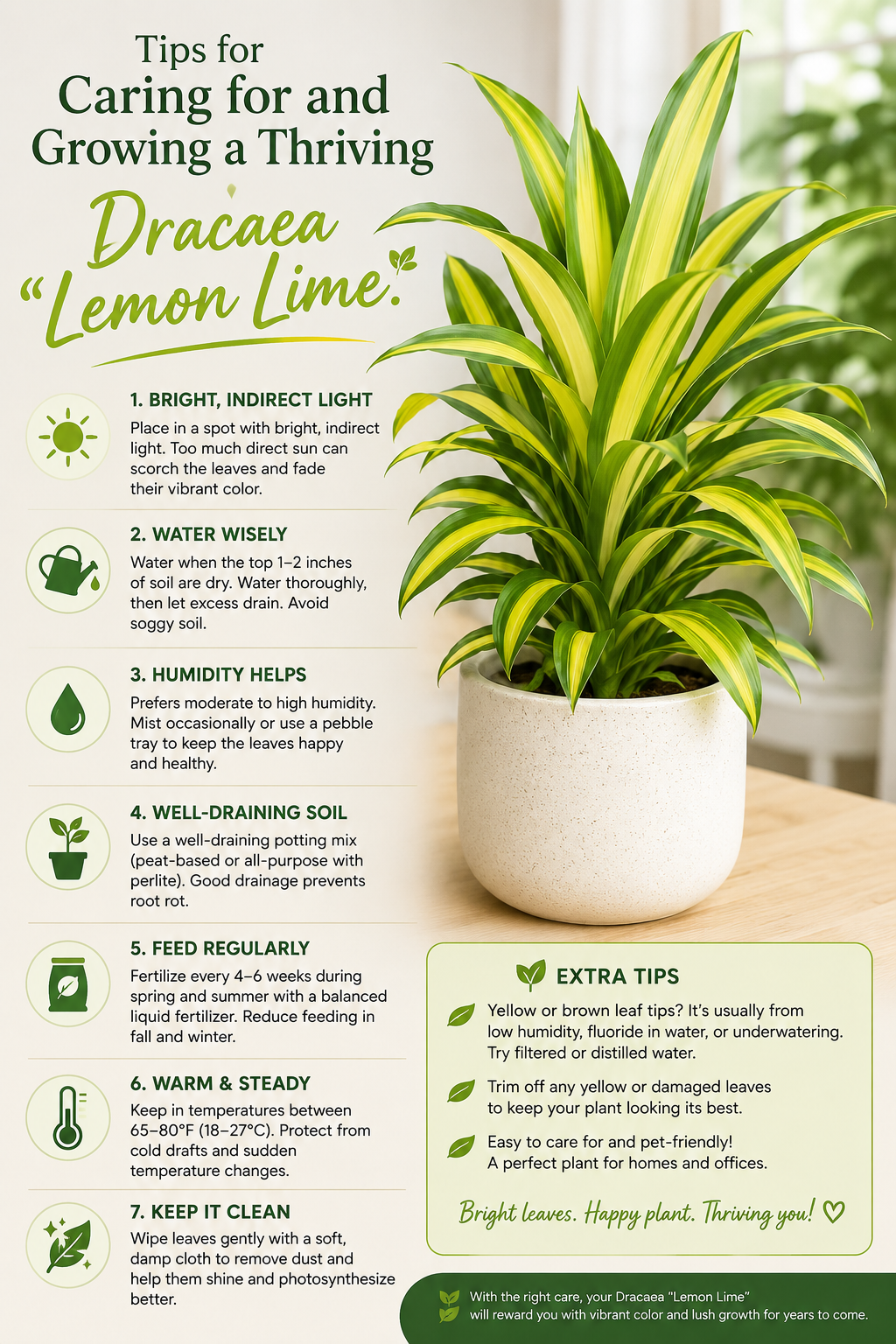
Dracaena Lemon line is often considered to be one of the most beautiful and low-maintenance indoor plants that people can keep in their homes. This plant does not require a lot of care and maintenance, and it also provides you with benefits. Along with enhancing the appearance of your space, it also possesses air-purifying qualities, which means that it will keep the air clean inside your house.
This tropical plant can add a magical touch to any space it is a part of. So, whether you are a beginner or a seasoned gardener, this wonderful plant is perfect for you. This blog will provide you with all the information that you need to have a thriving Dracaena lemon lime inside your home.
Growth Behavior and Natural Habitat of Dracaena Lemon Lime
Dracaena ‘Lemon Lime’ comes from tropical Africa, where it does best in warm, humid places, usually under the heavier shade cast by bigger trees. It tends to start off in low light, so the whole vibe matches indoor life pretty well.
The leaves are shiny, blade-like, and can get close to 2 feet (60 cm) long. Over time, the plant forms a thicker cane-shaped stem, and yeah, it ends up looking kinda architectural, even when it’s not trying.
Tips to ensure that the plant remains healthy
Now that you have decided to keep a lemon lime indoors, you need to adhere to the directions that we are giving here to ensure that you create the best conditions for the plant.
-
Light requirements
This dracaena likes bright to medium indirect light. It can handle lower light, but expect slower growth, and the color may not stay as lively. Try not to put it in direct sunlight, because the leaves can get scorched pretty fast.
-
Watering needs
You should only water the plant when the top 1-2 inches of soil feel dry. During spring and summer, plan on watering about once a week. In fall and winter, back off to every 2-3 weeks.
Also, make sure the pot has drainage holes; root rot is just waiting there, like a quiet problem.
-
Humidity and temperature
Ideal temperatures are roughly 65°F to 80°F (18°C to 27°C). It tolerates normal indoor humidity, but if your air is dry, occasional misting can help it feel more comfortable.
-
Soil Requirements
Go for a well-draining peat-based potting mix. A balanced option is 50% potting soil, 25% perlite, and 25% compost. You should not opt for dense compact mixes, as they hold onto water too long, and drainage suffers.
-
Fertilization
Use a diluted liquid fertilizer every 6 weeks while it’s actively growing, which is usually spring through fall. In winter, it’s better to pause fertilizing since the plant slows down or goes dormant.
-
Repotting
It is essential to repot the plant every 2-3 years, or sooner if the roots start circling or crowding the container. Pick a pot that’s about 1-2 inches wider in diameter than the current one. When you repot, use fresh, well-draining soil so it has nutrients again, and so the roots don’t sit in old, exhausted mix.
Source: Abodelook

 English
 Arabic
 French
 Spanish
 Portuguese
 Deutsch
 Turkish
 Dutch
Dutch
 Italiano
 Russian
 Portuguese (Brazil)
 Greek
Greek
