


5 Ecommerce Challenges that New Businesses Face
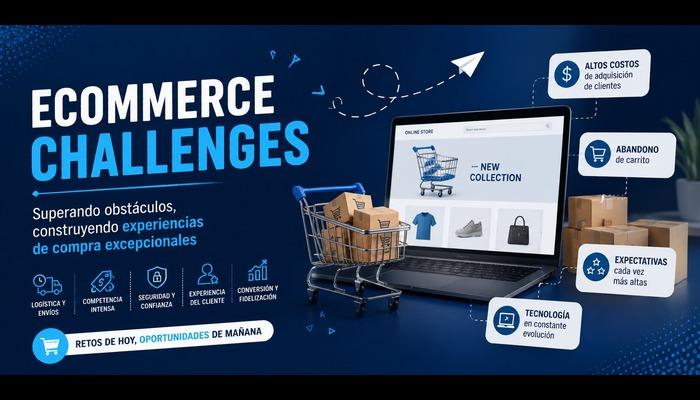
Are you new to the e-commerce world? Beware of the ecommerce challenges that may prevent your business's growth. E-commerce is one of the most versatile industries. With hundreds of business opportunities, online selling welcomes businesses of all sizes and categories to join the industry and grow. But the grass always looks greener on the other side. The reality of e-commerce is beyond imagination.
Hurdles are constant in the e-commerce industry. These hurdles can stem from any factor, whether customer, technical, or operational-related. There are many issues that drive setbacks for an online selling business. Some of these challenges are interconnected in the business’s ecosystem. To prevent major losses, navigating these challenges is essential, especially if you are new to e-commerce.
To identify which challenges are becoming hurdles to your business’s growth, first understand which are more likely to disrupt the smooth flow of an e-commerce company. The blog addresses 5 major ecommerce challenges that new businesses face. Carefully understand these challenges and determine the right solution to prevent major losses. Read more to take a close look at these challenges.
-
Increasing Competition
E-commerce is a dynamic industry with tons of opportunities for new businesses. However, this means the industry's competition is fierce and rapid. Since there are so many businesses competing in similar categories, driving customers’ attention can be tough and time-consuming. As a result, becoming customers’ first choice or being a recognisable brand is one of the major ecommerce challenges. But strategising the brand with a creative approach can help a business thrive in fierce competition.
Solution
Focusing on competitor analysis is one of the best strategies to overcome the hurdles caused by increasing competition. This way, you can identify your competitors' strengths and weaknesses. Once you evaluate them, you can develop appropriate business strategies and make the right decisions. Competitor analysis helps you determine pricing strategies, product variations, marketing plan, customer service, and other micro-marketing strategies. Overall, competitor analysis helps you learn from your rival’s mistakes and make the right decisions to achieve your own market position.
-
Rising Customer Expectations
Customer expectations are ever-evolving, and fulfilling them requires significant effort, which is essential for a business to survive. Ever since, the market has given customers countless options to choose from, and their expectations and desire for something better and more at a lower cost have increased. Personalised shopping experience, fast and free shipping, an easy buying process, and trustworthy customer service are among the rising customer expectations in the e-commerce industry. These high demands can sometimes be a lot to take. As a result, meeting these expectations becomes a challenge, and businesses may fail to do so, leading customers to switch to a better alternative.
Solution
First of all, a mobile-optimised approach is better for improving the user experience, as it dominates the e-commerce market in the best possible way. Since more than half of the audience uses smartphones for online shopping, it is the best way to satisfy customers’ expectations. Then, focus on delivering a great customer experience that exceeds expectations. Hire well-trained professionals who are experts in problem-solving. Keep track of customers’ feedback and enquiries using the right tools, and resolve their issues as soon as possible. Lastly, run effective data analytics programs to help you develop a better understanding of areas for improvement and how to drive higher conversion rates.
-
Abandoned Cart
Cart abandonment is one of the most pressing ecommerce challenges that an average business faces. Customer visits the site, likes something, and adds the product to the cart. But they don’t go to the payment gateway. There could be any number of reasons, such as a lack of trust, high shipping fees, hidden charges, an extended delivery date, or a complex checkout procedure. Evaluating the issue behind abandoned carts is tough to understand. To reverse the loss from lost sales, determining the reasons behind cart abandonment is a must and requires strategic thinking.
Solution
Make sure your site works smoothly using a reliable navigation system to track your website or app. The user should not face any glitches or get stuck when visiting the site or purchasing anything. Make sure the important buttons and options, such as “add to cart” or “buy now,” are visible and clickable on every product page. Highlighting such buttons would be the best idea, as it will help the user navigate them more easily and make a purchase.
-
Limited Options for Scalability
To make an e-commerce brand a success, expansion is a must. The expansion is not just limited to business growth. It can also be related to technical scalability. If your e-commerce platform is outdated or the structure is rigid, you may struggle to manage traffic, add product lines, or support new technologies. As a result, entering new markets becomes challenging and scaling global operations becomes complex and risky.
Solution
Upgrading with modern technology is the best and only way to overcome the ecommerce challenges that occur due to limited options for scalability. It is always better to opt for technologies that can support multilingual, multicurrency, and multi-storefront functionality. This way, new e-commerce sellers can set up their brand in the international marketplace without having to build a new codebase.
-
Expensive Logistics
A large share of e-commerce profits is eaten up by managing returns and shipping costs. Every return requires additional cost. Additionally, if returns involve international shipping, customs duties and delays are likely to affect a business’s profits. In some scenarios, inflation significantly increases logistics costs. Plus, when the tariffs keep rising, managing sales profit can be challenging.
Solution
If you are setting up a new business in the e-commerce industry, there is no need to set up your own logistics and supply chain management. There are many integrated delivery service APIs in India that collaborate with e-commerce businesses. DHL, FedEx, Delhivery, Blue Dart, Xpressbees, and the rest are some of the leading, reliable names in the logistics industry. These service providers automate logistics and its related issues. No need to worry about warehousing, as the integrated delivery service providers handle that on your company’s behalf. As a result, costs incurred via customs duties and delays can be eliminated.

 English
 Arabic
 French
 Spanish
 Portuguese
 Deutsch
 Turkish
 Dutch
Dutch
 Russian
 Romaian
 Portuguese (Brazil)
 Greek
Greek
