


Decoding the Intake Howl: Understanding Airbox Resonance in Motorcycles
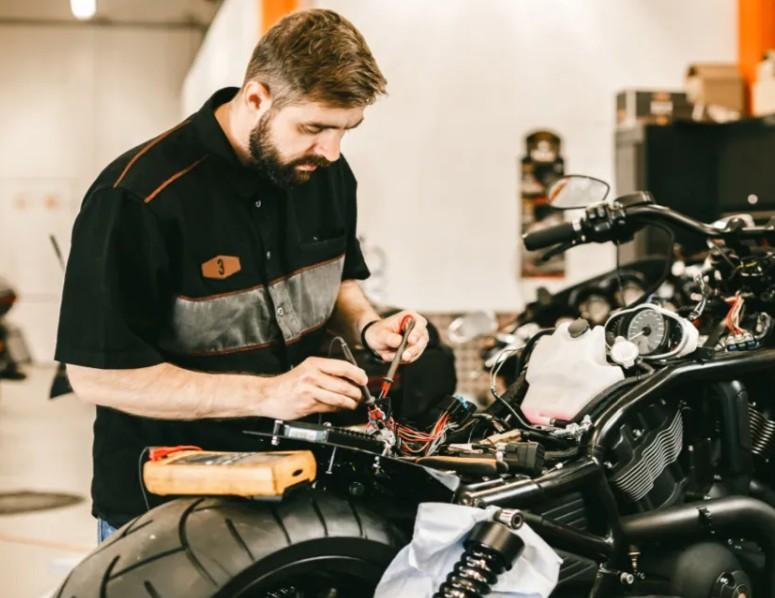
Every experienced rider eventually becomes attuned to the mechanical "voice" of their motorcycle. You know exactly how the engine should sound at idle, at wide-open throttle, and during steady cruising. However, when an unfamiliar "howling" or "moaning" noise begins to emanate from the airbox, specifically at partial throttle, it can cause significant concern. This sound, often described as a low-frequency drone or a resonant moan, can be baffling because the bike may otherwise seem to perform normally. While some degree of induction noise is inherent to high-performance engines, an excessive or change in pitch usually points to an issue with the intake tract, air density, or the structural integrity of the airbox itself. Understanding this phenomenon requires a journey into the acoustics of internal combustion and the vital role of air induction hardware in motorcycle performance.
The Physics of Airbox Resonance and Helmholtz Theory
To understand why your airbox is howling, you must first understand that your airbox acts as an acoustic chamber, not just a simple plastic container. In engineering terms, it utilizes the principles of Helmholtz resonance—the same physics that allow you to create sound by blowing across the top of a glass bottle. The airbox is designed to smooth out the airflow to the throttle bodies and provide a reservoir of relatively still air for the engine to draw from. At partial throttle, the butterfly valves are only slightly open, forcing the incoming air to accelerate through a restricted orifice. This can create air turbulence that interacts with the geometry of the airbox. If the airbox's resonant frequency shifts—perhaps due to a loosened intake boot or a change in the internal pressure wave dynamics—that turbulence manifests as an audible howl. It is essentially the intake track "singing" in response to the specific airflow velocity dictated by your throttle position.
Differentiating Normal Intake Noise from Mechanical Anomalies
It is important to determine if your motorcycle’s noise is a symptom of a fault or simply a characteristic of its design. Many modern bikes with large airboxes and aggressive cams will naturally produce a throaty moan at mid-range RPMs under load. However, if this noise has suddenly appeared on a bike that was previously quiet, or if it is accompanied by a sluggish throttle response or hesitation, you are likely dealing with an anomaly. The first step is to listen for changes in the sound as you adjust the throttle. If the howling pitch changes linearly with engine speed regardless of load, the issue is likely rotational. If the noise is strictly tied to throttle opening angle, the problem is definitively within the induction system. A change in the intake note often serves as the "canary in the coal mine," alerting you to small air leaks or imbalances before they manifest as a noticeable loss in power or fuel economy.
The Role of Airbox Integrity and Filtration Quality
The structural integrity of the entire intake path is the most common culprit for unwanted induction noises. The airbox is connected to the throttle bodies via rubber intake boots, which are subjected to significant heat and vibration. Over time, these rubber components can harden, crack, or work themselves loose from their seating. A microscopic gap between the airbox and the throttle body creates a "whistle" or "howl" as air is drawn in from the outside rather than through the filter. Similarly, a dirty or improperly seated air filter can disrupt the airflow pattern inside the box. If the filter element is collapsed or has a tear, the pressure wave reflection inside the airbox changes, altering the acoustics. Before assuming there is a major engine problem, perform a thorough inspection of every intake manifold and boot, ensuring every clamp is torqued to specification and every seal is airtight.
Throttle Body Synchronization and Airflow Turbulence
Beyond external leaks, internal imbalances within the throttle bodies can cause excessive howling at partial throttle. If you have a multi-cylinder engine, the throttle bodies must be synchronized so that each cylinder draws an equal amount of air. If one throttle body is significantly out of sync, the engine experiences uneven induction pressure. At partial throttle, this imbalance causes chaotic air turbulence as the air seeks the path of least resistance through the airbox. This turbulence vibrates the plastic walls of the airbox, creating a resonant howling sound that is physically audible to the rider. This is a common maintenance issue that often goes overlooked during standard services. Achieving perfect synchronization not only eliminates strange acoustic resonances but also significantly improves engine smoothness, fuel efficiency, and the overall longevity of your engine's internal components.
Elevating Your Technical Proficiency Through Education
Developing the ability to diagnose these subtle acoustic changes is what separates a casual rider from a competent technician. When you learn to correlate specific engine sounds with mechanical conditions, you gain the confidence to perform your own diagnostics and maintenance, saving time and money in the long run. There is no substitute for structured, expert-led training when it comes to understanding the intricacies of modern motorcycle systems. For those looking to master everything from air induction diagnosis to engine timing and chassis maintenance, enrolling in a comprehensive motorbike maintenance course is the most effective path forward. This type of training covers the fundamental principles of operation for every major system on your bike, providing the hands-on experience needed to tackle complex mechanical issues with professional-grade accuracy and safety, ensuring your machine stays in peak condition for the long road ahead.
Conclusion: When to Seek Professional Assistance
While many intake noises can be resolved through basic tightening, cleaning, and synchronization, some howling sounds may point toward more severe issues, such as internal valve train wear or cylinder head gasket failure. If you have inspected the intake tracts, verified the integrity of your airbox, and performed a throttle body synchronization, but the howling persists or is accompanied by other symptoms like misfiring, stalling, or oil smoke, it is time to seek professional intervention. A professional mechanic has access to diagnostic tools like smoke machines for leak testing and precision vacuum gauges that can identify issues invisible to the naked eye. Do not ignore persistent, strange noises; they are the engine's way of asking for attention. By addressing these small irregularities early, you prevent minor maintenance tasks from escalating into catastrophic mechanical failures, ensuring your motorcycle remains a reliable, joy-filled companion for years to come.
 French
 English
 Arabic
 Spanish
 Portuguese
 Deutsch
 Turkish
 Dutch
Dutch
 Italiano
 Russian
 Romaian
 Portuguese (Brazil)
 Greek
Greek
